The Technician in Your Living Room: Vetting Gaps That Put Smart Home Customers at Surveillance Risk
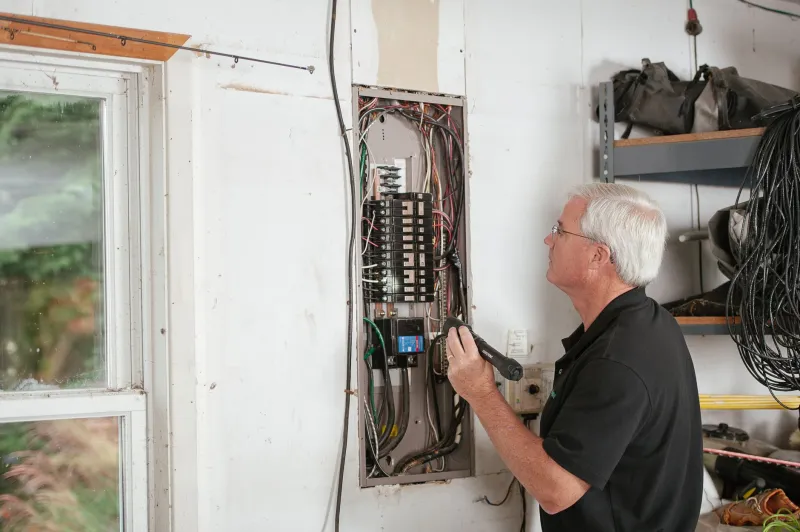
The appointment window arrives. A technician — courteous, uniformed, carrying a tablet — enters your home to install a smart doorbell, configure a security system, or set up a connected speaker network. The visit lasts two hours. In that time, the technician moves through your bedroom, your bathroom hallway, your children's playroom. You have no particular reason to be concerned. You booked through a reputable company. Surely someone ran a background check.
Surely someone did. But the question of who ran that check, how thorough it was, and whether the person standing in your home is actually the person whose background was verified is more complicated than most homeowners realize.
The Subcontracting Problem
The smart home installation industry operates on a franchise and subcontracting model that creates genuine accountability gaps. Major retail and technology brands frequently partner with regional installation networks, which in turn dispatch technicians who may be independent contractors rather than direct employees. Background check requirements — where they exist — are often applied at the point of the primary contractor relationship. By the time a job reaches the individual dispatched to your home, the verification trail can be difficult to follow.
A former operations manager at a mid-sized installation network, who requested anonymity due to ongoing industry relationships, described the structural issue plainly: "The brand you booked with has standards. Whether those standards actually reach the person who shows up is a different question. We had technicians working jobs who were referred through two layers of subcontracting. What the end customer knew about that person's background was essentially nothing."
This is not a hypothetical vulnerability. Court records and law enforcement incident reports from multiple states document cases in which individuals employed in home services roles — including technology installation — used their access to plant recording devices. The specific subset involving smart home technicians is not systematically tracked at the federal level, which itself represents a data gap that advocates argue obscures the true scale of the problem.
What Background Checks Actually Cover
Industry-standard background checks for home services workers typically include criminal history searches, sex offender registry cross-referencing, and identity verification. What they frequently do not include is any evaluation of a candidate's access to covert surveillance hardware or prior employment in contexts where surveillance concerns arose.
Background check databases are also constrained by the records they contain. Arrests that did not result in convictions, incidents that occurred in jurisdictions with limited data-sharing, and offenses committed under a different name may not surface. A check that returns clean results reflects the limits of available records — not a comprehensive guarantee of character.
Several consumer advocacy groups have called for a federal standard requiring enhanced screening for any worker who regularly enters occupied residential spaces as part of their employment. No such federal standard currently exists. A handful of states, including California and New York, impose licensing and screening requirements on certain home services categories, but smart home installation does not consistently fall within those regulated categories.
Practical Countermeasures for Homeowners
The accountability gaps in the installation industry are real, but they are not unmanageable. Homeowners who approach installation appointments with a structured protocol significantly reduce their exposure.
Verify identity before granting access. Request the full name of the assigned technician in advance and confirm it matches the identification presented at the door. If the person who arrives is not the person listed on the work order, it is reasonable — and appropriate — to ask for clarification before proceeding.
Remain present throughout the visit. Accompany the technician through every room they access. This is not an expression of distrust; it is standard practice for any professional who understands the nature of their work environment. Reputable technicians will not object.
Conduct a post-installation sweep. After the technician departs, inspect the areas they accessed. Look for objects that appear newly placed or repositioned. Pay particular attention to power outlets, smoke detectors, and any decorative items that could conceal a small device. A consumer-grade lens detector, available from several reputable retailers, can identify optical elements that a visual inspection might miss.
Document the visit. Note the technician's name, the company they represented, and the time of the appointment. If a concern arises later, this record will be essential for any follow-up with the company or law enforcement.
Review your own smart home footage. If you have an existing security system with interior cameras, review the footage from the installation period. Any behavior that seems inconsistent with the scope of the job — extended time spent in a single location, interaction with objects unrelated to the installation — warrants a direct inquiry with the company.
An Industry Without Sufficient Accountability
The smart home industry has grown rapidly and profitably. The accountability infrastructure supporting that growth has not kept pace. Until federal or state-level standards impose consistent, verifiable screening requirements on everyone who enters a residential space in a professional capacity, the burden of protection falls on the homeowner.
That is an imperfect arrangement. It is, however, the current reality. Approaching it with informed skepticism — rather than reflexive trust — is not paranoia. It is prudent.