Reflections of a Different Kind: What Your Smart Bathroom Mirror May Be Capturing Without Your Knowledge

For most Americans, the bathroom represents the last reliable sanctuary from the connected world. It is where the day begins and ends, where conversations are unguarded, and where the expectation of absolute privacy remains largely unchallenged. That expectation, however, is quietly eroding — not through a hidden camera planted by a stranger, but through a device homeowners are voluntarily mounting on their walls and calling a luxury upgrade.
The smart bathroom mirror is no longer a novelty. Products from manufacturers including HiMirror, Simplehuman, Capstone Connected Home, and a growing roster of international brands now occupy shelf space at major American retailers and command prices ranging from $200 to well above $1,500. Their appeal is genuine: voice-activated lighting, integrated displays, skin analysis cameras, and seamless synchronization with smart home ecosystems. What the marketing materials address far less directly is the surveillance infrastructure embedded in every one of these features.
A Camera in the One Room You Never Expected
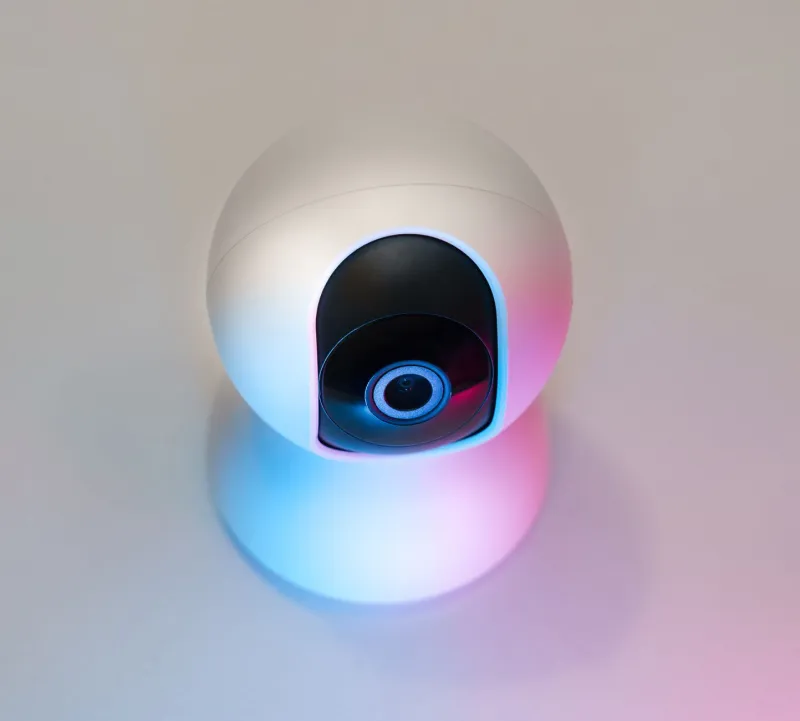
Skin analysis is the flagship selling point for several leading smart mirror brands. The technology uses an onboard camera — often high-resolution — to photograph the user's face, analyze pores, detect wrinkles, and track changes over time. On its surface, this is a cosmetic tool. Structurally, it is a camera mounted at eye level inside a bathroom, connected to the internet, and transmitting images to a manufacturer's remote server.
The distinction matters enormously. When a homeowner installs a security camera in a living room, they make a deliberate choice to introduce surveillance into that space. When they purchase a smart mirror for skin care guidance, most do not conceptualize that transaction in the same terms. Yet the hardware capabilities are, in several cases, functionally identical.
HiMirror's product line, for instance, explicitly photographs users during each session and stores those images in a cloud environment to build a longitudinal skin profile. The company's privacy documentation acknowledges this practice, though the language describing data retention periods and third-party sharing arrangements is, by any fair assessment, ambiguous. Similar patterns appear across competitor products.
Microphones, Voice Commands, and the Audio Question
Beyond cameras, a significant portion of smart mirrors now incorporate microphones to support voice-activated controls. Users can adjust lighting, set timers, or query weather conditions without touching the glass. The convenience is self-evident. The privacy implication is less frequently discussed.
Microphones in always-on or wake-word-activated states within a bathroom environment capture considerably more than the commands they are designed to receive. Conversations, phone calls conducted during morning routines, and ambient audio from adjacent rooms all fall within range. The question of whether these audio snippets are transmitted, stored, or analyzed by manufacturers or their cloud service partners is one that most product documentation does not answer with clarity.
Federal Trade Commission guidelines require that connected device manufacturers disclose data collection practices in accessible terms, but enforcement in the smart home category has been inconsistent. The absence of bathroom-specific privacy legislation at the federal level — and the patchwork nature of state-level statutes — leaves consumers with limited legal recourse even when they suspect their device is collecting more than they authorized.
What the Terms of Service Actually Say
Reviewing the end-user license agreements and privacy policies of several prominent smart mirror products reveals language that is, at minimum, worth reading before installation. Common provisions include:
- Broad data sharing authorizations that permit manufacturers to share collected information with "affiliated partners," "service providers," and in some cases "third parties for marketing purposes."
- Retention clauses that allow biometric and photographic data to be stored indefinitely or until the user submits a formal deletion request — a process that is rarely straightforward.
- Firmware update provisions that grant manufacturers the right to modify device functionality, including data collection behavior, without explicit user notification beyond an updated terms document.
None of these provisions are unique to smart mirrors. They appear across the smart home product landscape. What distinguishes the mirror context is the room in which the device operates. The same clause that feels tolerable in a kitchen or living room carries a different weight when applied to a camera and microphone positioned at face level inside a bathroom.
Testing What Your Mirror Is Transmitting
For homeowners who already own a connected bathroom mirror — or who are evaluating a purchase — several practical verification steps can meaningfully reduce exposure without requiring technical expertise.
Network traffic monitoring is among the most accessible methods. By logging into a home router's administrative interface, users can observe which external IP addresses a device communicates with and how frequently. Unusual transmission volumes during periods when the mirror is not actively in use may indicate background data collection. Consumer-grade tools such as Fing or network-aware routers from brands like Eero and Firewalla can simplify this process considerably.
Physical camera obstruction offers a low-technology but reliable safeguard. A small piece of opaque tape placed over a mirror's camera lens during non-use periods prevents image capture without affecting other device functions. This approach mirrors the widely adopted practice of covering laptop webcams and is equally valid in a bathroom context.
Microphone management is more complex, as most smart mirror microphones lack a physical disconnect switch. Where a device's companion application offers a microphone disable option, that setting should be activated when voice commands are not in use. For users with heightened privacy concerns, placing the mirror on a dedicated smart home network segment — isolated from devices containing sensitive personal data — limits the potential blast radius of any unauthorized access.
Reviewing and restricting app permissions for any companion software associated with the mirror is a step that takes under five minutes and frequently reveals data access authorizations that exceed what the device's core functions require.
The Regulatory Landscape and Where It Falls Short
The California Consumer Privacy Act provides residents of that state with meaningful rights regarding data collected by connected devices, including the ability to request deletion and to opt out of data sale. Illinois's Biometric Information Privacy Act imposes specific restrictions on the collection and storage of facial geometry data — a category that smart mirror skin analysis almost certainly implicates.
For the majority of Americans, however, no equivalent protections exist at the state level, and federal legislation addressing smart home biometric data collection remains stalled. The FTC has signaled increased attention to connected device privacy practices in recent years, but the regulatory framework has not kept pace with the speed at which these products have entered American homes.
Manufacturers operating in this gap bear responsibility for the opacity of their data practices. Equally, retailers who stock these products without surfacing privacy disclosures at the point of sale contribute to an information environment in which consumers are making consequential decisions without adequate facts.
The Mirror as a Surveillance Surface
The bathroom mirror occupies a unique position in domestic life. It is the site of the most unguarded self-presentation, the space where Americans begin and close each day in a state of physical and psychological openness. The introduction of networked cameras and microphones into that space — regardless of the legitimate utility those features may provide — warrants a level of scrutiny proportional to the intimacy of the environment.
This is not an argument against smart home technology. It is an argument for informed adoption. Before mounting any connected device inside a bathroom, homeowners should ask what data it captures, where that data travels, who has access to it, and how long it is retained. The answers, when they are available at all, are frequently more expansive than the product's marketing suggests.
The mirror has always shown you what you look like. The question now is who else is watching.