Calm on the Surface, Compromised Underneath: The Hidden Camera Threat Inside America's Spas and Wellness Centers
Calm on the Surface, Compromised Underneath: The Hidden Camera Threat Inside America's Spas and Wellness Centers
There is a particular kind of trust involved in visiting a day spa. Guests arrive voluntarily, remove their clothing in unfamiliar rooms, close their eyes on a massage table, and surrender a degree of physical awareness that they would rarely permit in any other commercial setting. That trust is, in many ways, the entire product being sold. And it may be precisely what makes spas one of the most underreported hidden camera environments in the United States.
While much public attention has focused on surveillance risks in hotel rooms, short-term rentals, and gym locker rooms, the wellness industry has largely escaped sustained scrutiny. That oversight is worth correcting.
A Pattern Hidden in Plain Sight
Documented incidents of hidden camera discoveries inside US spa facilities are more common than the industry's serene branding would suggest. In 2019, a massage therapist at a Virginia spa was charged after investigators found a recording device concealed in a treatment room. A case in suburban Atlanta involved a spa owner who had installed cameras in multiple private rooms, allegedly capturing footage of dozens of clients over an extended period. Similar incidents have been reported in California, Florida, Texas, and New York — states with large spa markets and, theoretically, some of the country's stronger privacy statutes.
These cases rarely generate the same media velocity as comparable incidents in hotels or rental properties. One reason may be the nature of the complaint itself: victims are often reluctant to come forward precisely because the footage, if it exists, documents them in states of undress or physical vulnerability. The psychological barrier to reporting is significant.
Another factor is institutional: spa operators are not typically required to post surveillance disclosures, and the industry lacks a unified federal regulatory framework governing interior monitoring. The result is a patchwork of state laws that vary dramatically in scope and enforcement.
The Regulatory Patchwork
Under federal law, the Video Voyeurism Prevention Act of 2004 prohibits the intentional capture of images of a person's private areas without consent in circumstances where that person has a reasonable expectation of privacy. However, the law applies specifically to federal property and federal jurisdiction — it does not, on its own, reach most commercial spa environments.
State-level protections fill some of that gap, but inconsistently. California's Penal Code Section 647(j) offers relatively robust protections against unauthorized recording in areas where nudity is expected, including treatment rooms. Illinois and New York have similarly broad statutes. But in a number of states, the legal threshold for criminal liability requires proving specific intent to a degree that complicates prosecution. Civil remedies exist, but pursuing them demands resources and a willingness to revisit the incident publicly — barriers that many victims cannot or choose not to overcome.
No federal agency currently mandates that spas conduct internal audits for unauthorized recording equipment. The Federal Trade Commission's jurisdiction over deceptive practices could theoretically apply if a spa marketed itself as a private sanctuary while covertly recording guests, but such a case has not been prominently litigated. State attorneys general have pursued individual operators, but proactive enforcement at the industry level remains limited.
Why the Spa Environment Is Particularly Vulnerable
Several structural features of the spa setting converge to create what security professionals might describe as a high-opportunity surveillance environment.
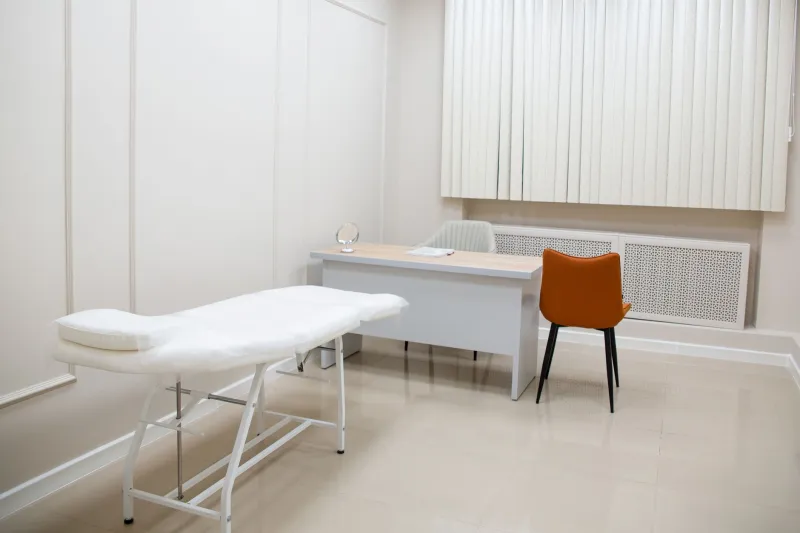
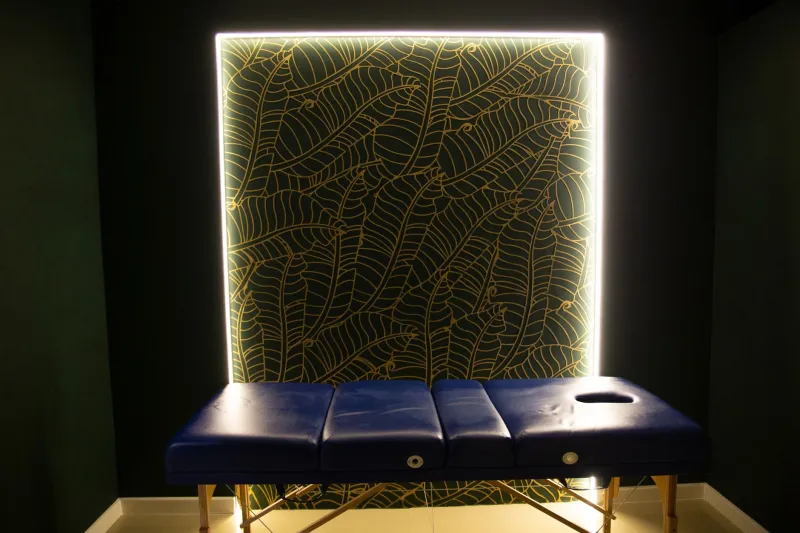
Isolation by design. Treatment rooms are intentionally private. Doors are closed, ambient music is played, and staff interaction is minimized during sessions. This seclusion, engineered for comfort, also minimizes the likelihood that a device will be detected or disturbed.
Extended exposure windows. Unlike a fitting room visit that may last minutes, a massage or body treatment session can run 60 to 90 minutes. A guest may be stationary and unclothed for that entire duration.
Relaxed vigilance. The psychological state a spa is designed to induce — calm, trust, reduced alertness — is antithetical to the kind of environmental awareness that would prompt a guest to examine light fixtures, decorative objects, or ventilation grilles for concealed lenses.
Inconsistent staff oversight. Many spas, particularly smaller independent operations, have limited management presence on the floor. In franchised or independently owned facilities, the person with physical access to treatment rooms may also be the person operating the business with minimal external accountability.
Normalizing props. Treatment rooms are typically furnished with items that provide natural concealment for small cameras: essential oil diffusers, decorative stones, candles, framed artwork, wall-mounted speakers, and clock radios. None of these objects would strike a relaxed guest as suspicious.
What Responsible Consumers Should Do
The solution is not to avoid spas. It is to approach them with the same measured awareness that privacy-conscious travelers now apply to hotel rooms and rental properties.
Arrive early and conduct a brief visual sweep. Before undressing, take two to three minutes to examine the room. Look for objects that seem out of place or positioned in ways that don't serve an obvious purpose. A clock facing the massage table from an unusual angle, a small decorative item with a dark circular recess, or a smoke detector in a room with no fire suppression system are all worth noting.
Use a radiofrequency (RF) detector. Wireless cameras transmit signals that RF detectors can identify. These devices, available from $30 to several hundred dollars depending on sensitivity, can flag active transmissions in a room. They are not foolproof — devices recording locally to a memory card will not emit a signal — but they significantly raise the detection threshold.
Consider a lens detection tool. Optical lens detectors use infrared or laser light to cause camera lenses to reflect back visibly. Running one across a room can reveal lenses embedded in objects that appear inert. Combined with an RF sweep, this approach covers both wireless and hardwired concealed cameras.
Photograph the room before your session. This establishes a baseline record of the space as you found it. Should a concern arise later, documentation of the room's configuration at the time of your visit is valuable.
Ask questions at the front desk. Inquire directly whether the facility uses any interior cameras for security purposes and, if so, where they are located. A legitimate operator should be able to answer clearly. Evasiveness or hostility in response to a reasonable question is itself informative.
The Comfort Trap
The spa industry's most effective marketing tool — its association with safety, renewal, and personal care — may be its clients' greatest liability from a privacy standpoint. When an environment is constructed to signal trustworthiness, the natural human response is to lower one's guard. That is, in a sense, the point.
But privacy protection does not take a day off because the lighting is soft and the music is calming. The same critical awareness that a traveler brings to a hotel room, or a renter brings to a new apartment, belongs in the treatment suite as well. The stakes — intimate footage, potential distribution, lasting psychological harm — are no less serious simply because the setting is pleasant.
America's spa industry is, by all accounts, largely composed of legitimate operators who have no interest in surveilling their clients. But documented cases confirm that exceptions exist, and the structural conditions that make discovery difficult are real. Informed guests are the most effective countermeasure available — and the wellness industry, for all its talk of empowerment, has little incentive to tell you that.