When Healing Becomes Exposure: The Hidden Camera Crisis Inside America's Medical Offices
When Healing Becomes Exposure: The Hidden Camera Crisis Inside America's Medical Offices
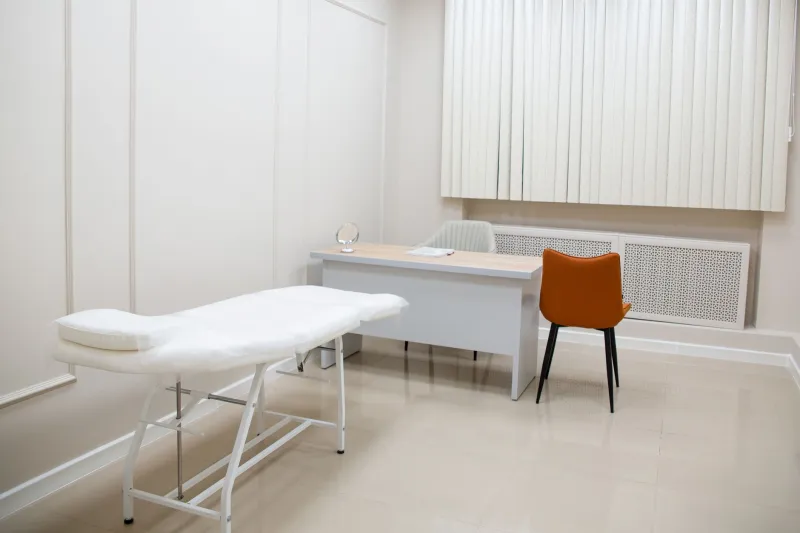
The examination room is, by design, a space of enforced trust. Patients disrobe, disclose, and defer — to physicians, dentists, therapists, and the clinical environments that house them. That trust, however, has been systematically exploited in a growing number of documented cases across the United States, where hidden cameras have been discovered concealed inside the very rooms where Americans are at their most physically and emotionally exposed.
This is not a theoretical threat. It is an active and underreported one.
A Pattern Hiding in Plain Sight
The documented cases span geography and specialty. In 2019, a Virginia gynecologist, Dr. Nikita Levy, became the subject of one of the most extensive medical voyeurism investigations in American history — though his crimes predated widespread public awareness by years. In Ohio, a Columbus-area dentist faced charges after a camera was recovered from his practice. In California, a physician's assistant was arrested following the discovery of a recording device concealed inside an examination room. In each instance, the camera was positioned to capture patients during undressing or physical examination.
What unites these cases is not geography or medical specialty — it is opportunity. Examination rooms are inherently private spaces that patients enter alone, often after being instructed to remove clothing. They are rooms where medical staff come and go, where equipment is routinely added or repositioned, and where patients have little reason to scrutinize their surroundings. For a perpetrator with access, the environment is, regrettably, ideal.
Therapy offices present a distinct but equally serious vulnerability. Patients in psychiatric or counseling settings disclose information of extraordinary sensitivity. A covert recording in such a space does not merely capture an image — it captures confession, trauma, and private narrative in a form that can be weaponized indefinitely.
Why HIPAA Doesn't Cover the Lens
Many patients assume that the Health Insurance Portability and Accountability Act — the federal statute governing medical privacy — provides a legal shield against covert surveillance. This assumption is understandable but incorrect.
HIPAA was constructed to regulate the handling of protected health information: medical records, billing data, diagnostic disclosures, and related documentation. The statute's architects were not contemplating hidden cameras. As a result, HIPAA imposes no specific prohibition on covert video recording within clinical settings and establishes no federal criminal penalty for a provider who installs a surveillance device in an examination room.
The legal vacuum this creates is significant. Patients who discover they have been recorded in a medical office must look to a patchwork of state statutes — voyeurism laws, invasion of privacy torts, and, in some jurisdictions, specific medical privacy provisions — to pursue any remedy. The strength of those protections varies dramatically. States including California, Illinois, and New York maintain relatively robust statutory frameworks. Others offer patients comparatively little recourse.
At the federal level, the Video Voyeurism Prevention Act of 2004 prohibits covert recording in federal jurisdictions, but its reach does not extend to most private medical offices. Congressional efforts to modernize the statute have stalled repeatedly.
The Architecture of Concealment
Understanding where cameras are most frequently hidden in clinical environments is the first step toward meaningful self-protection. Investigators and privacy researchers have identified several recurring concealment methods specific to medical and dental settings.
Smoke detectors and carbon monoxide sensors are among the most commonly exploited objects in examination rooms. Their ceiling-mounted position provides an unobstructed field of view, their presence is unremarkable, and commercially available camera-integrated units are inexpensive and widely accessible online.
Wall clocks are a second frequent vehicle. Analog clock housings are sufficiently deep to accommodate a lens and transmitter, and their placement at eye level makes them particularly effective for capturing patients in states of undress.
Medical equipment housings — including the casings of blood pressure monitors, intercom panels, and air purifiers — have been used to conceal recording devices. In a clinical environment, patients are conditioned to treat equipment as functional and authoritative. A device that appears to belong in a medical room rarely attracts scrutiny.
Electrical outlets and USB charging ports represent an emerging concealment category. Camera-integrated outlet covers are available through numerous online retailers and are effectively indistinguishable from standard hardware without close inspection.
What Patients Can Realistically Do
The uncomfortable reality is that no patient can conduct a comprehensive sweep of an examination room without specialized equipment and a willingness to act on their findings. That said, several practical steps can meaningfully reduce risk.
Conduct a visual survey before disrobing. Upon entering an examination room and before removing any clothing, take sixty seconds to examine the space deliberately. Look for objects positioned with an unobstructed sightline toward the examination table or changing area. Note anything that appears newly installed, inconsistent with the room's general aesthetic, or positioned at an unusual angle.
Use a radio frequency (RF) detector. Compact RF detectors, available from reputable retailers for between $30 and $150, can identify wireless transmission signals emitted by active cameras. Wired or locally recording devices will not trigger an RF alert, but a significant proportion of covert cameras in medical settings transmit wirelessly. Running a detector around the room before an examination is a reasonable precaution in any environment where trust is required.
Use a lens detection device. Optical lens detectors — sometimes integrated with RF detectors in combination units — identify the reflective signature of a camera lens by emitting a patterned infrared beam and detecting the return signal. These devices are effective against both active and inactive cameras and represent the most reliable portable detection method currently available to consumers.
Look specifically at smoke detectors. If a smoke detector is present, examine whether it has a small, dark aperture that does not correspond to the standard design of the unit. Genuine smoke detectors do not require a centered lens. Any circular opening inconsistent with the device's visible function warrants attention.
Trust your instincts and speak up. If something in an examination room appears out of place, patients are entitled to raise the concern with the front desk, office manager, or — if the situation warrants — local law enforcement. No legitimate medical practice should object to a patient expressing concern about an unfamiliar object in a private examination space.
Demanding Accountability from Providers
Patients also carry legitimate expectations of their healthcare providers beyond individual detection efforts. Medical and dental practices that install any form of video monitoring — even for ostensibly legitimate security purposes — should disclose that monitoring to patients explicitly, in writing, prior to any examination. The absence of such disclosure in a space where patients are expected to undress is itself a significant warning sign.
Advocacy organizations including the American Civil Liberties Union and the Electronic Privacy Information Center have called for expanded federal protections governing surveillance in healthcare settings. Until such protections materialize, patients are left to navigate an inconsistent legal landscape with whatever tools they can carry through the door.
The examination room should be a sanctuary. Ensuring that it remains one requires both legislative reform and individual vigilance — and, increasingly, a small device in your coat pocket that the physician never needs to know about.
StealCam covers privacy threats, detection technology, and surveillance law across the United States. Nothing in this article constitutes legal advice. Readers with specific legal concerns should consult a licensed attorney in their jurisdiction.