The Camera You Installed to Protect Your Child May Be Watching You Both
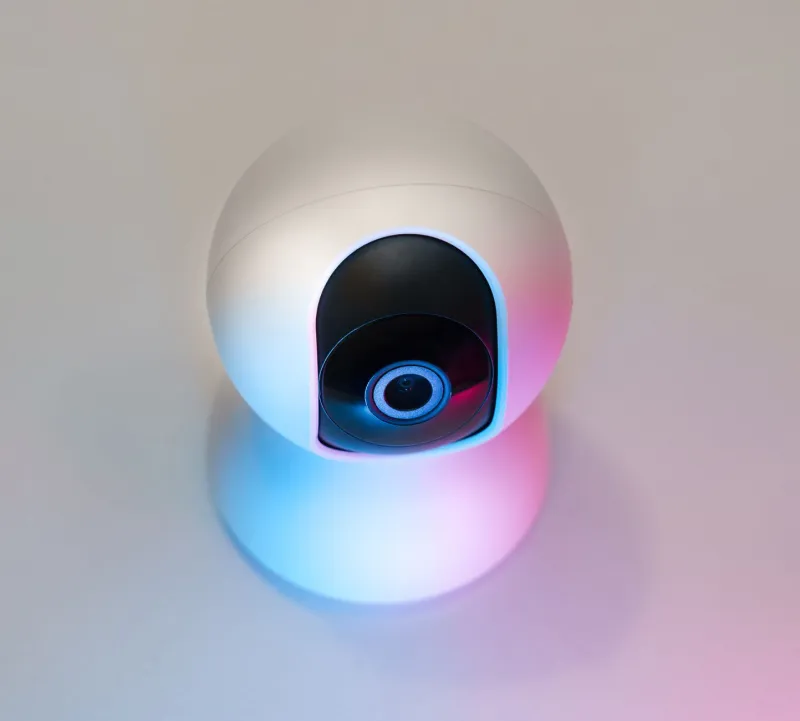
The appeal is straightforward: a small, discreet camera mounted in a nursery or living room allows parents to monitor their children remotely, verify that a caregiver is behaving appropriately, and maintain a sense of control over the home environment even while away. Nanny cams have become standard fixtures in millions of American households, and the market for home monitoring devices continues to grow at a steady pace.
What those same households rarely discuss — and what device packaging seldom discloses in plain language — is that the camera watching over a child is itself a network-connected device with its own access controls, firmware vulnerabilities, and corporate data policies. In many documented cases, that camera has been accessed by individuals who were never invited into the home.
The Architecture of Access
Most contemporary nanny cams are not standalone recording devices. They are Internet of Things (IoT) endpoints — small computers connected to a home's Wi-Fi network and, through it, to manufacturer-operated cloud servers. The live feed a parent views on their smartphone is typically routed through those servers before it reaches the app.
This architecture introduces multiple points of potential exposure. First, the manufacturer itself holds access to the infrastructure through which footage travels. Second, the device's firmware — the embedded software that governs how the camera operates — may contain unpatched vulnerabilities that attackers can exploit. Third, many users configure these cameras with weak credentials or leave factory-default passwords unchanged, creating an entry point that requires almost no technical sophistication to exploit.
Security researchers have repeatedly demonstrated that widely sold home cameras can be accessed without authorization. In 2019, a Tennessee family discovered that an unknown third party had gained access to their Ring camera inside their eight-year-old daughter's bedroom and used the two-way audio feature to speak to the child directly. Similar incidents involving Nest, Wyze, and other mainstream brands have been reported across the country, each following the same general pattern: a camera purchased for protective purposes became an instrument of intrusion.
What Manufacturers Actually Retain
The question of manufacturer access is less sensational than a hacking incident but arguably more consequential in scope. When a parent agrees to a device's terms of service — typically during a rapid setup process — they are often granting the company broad rights to process video data for purposes that include product improvement, AI training, and in some cases, sharing with third-party partners.
A review of privacy policies across several leading home camera brands reveals language that permits employees to review footage under loosely defined circumstances such as "quality assurance" or "safety investigations." Some policies explicitly state that footage may be shared with law enforcement upon request, without necessarily notifying the account holder.
For parents who install cameras specifically in bedrooms or private spaces, this means that footage of their children in intimate domestic settings may be stored on remote servers and subject to access by corporate personnel or government agencies — circumstances far removed from the original protective intent.
Credential Stuffing and the Reuse Problem
A significant proportion of unauthorized camera access incidents do not involve sophisticated hacking. They result from a technique known as credential stuffing, in which attackers use username and password combinations leaked from unrelated data breaches and test them against camera manufacturer login portals.
Because many Americans reuse the same email-and-password combination across multiple services, a breach at an unrelated retailer or social media platform can effectively hand an attacker the keys to a home camera account. Once inside, the attacker can view live and recorded footage, control pan-tilt camera functions if the model supports them, and in some cases, communicate through the device's speaker.
The scale of this problem is difficult to quantify precisely, but cybersecurity firm Avast estimated in a 2019 analysis that more than 100,000 home cameras were potentially accessible due to weak or reused credentials — a figure that has almost certainly grown alongside device adoption rates.
The Firmware Gap
Beyond credential-based attacks, the firmware running on many home cameras represents a persistent vulnerability. Manufacturers issue firmware updates to patch security flaws, but those updates are only effective if the device actually receives and installs them. Many home cameras do not update automatically by default, and a meaningful portion of users are unaware that firmware updates exist or how to apply them.
Researchers at the American Consumer Institute have previously identified that a substantial percentage of smart home devices in active use are running outdated firmware with known, publicly documented vulnerabilities. For a camera positioned in a child's room, an unpatched firmware flaw is not merely a technical inconvenience — it is an open door.
Evaluating the Devices Themselves
Not all home monitoring cameras carry equal risk. When assessing a device for this type of deployment, several factors warrant close examination.
Local storage capability is among the most important. Cameras that support on-device or local network storage — writing footage to an SD card or a network-attached drive rather than a cloud server — eliminate the manufacturer access concern entirely. Footage that never leaves the home cannot be reviewed by a corporate data team or intercepted in transit.
End-to-end encryption of the video stream is another meaningful differentiator. Some manufacturers encrypt footage in a manner that prevents even their own servers from decoding it; others do not. This distinction is rarely prominent in marketing materials and typically requires a close reading of technical documentation to confirm.
Two-factor authentication support should be considered a baseline requirement rather than an optional feature. Any device that permits account access with only a username and password should be treated with elevated caution.
Automatic firmware updates, enabled by default, meaningfully reduce the window of exposure created by newly discovered vulnerabilities.
Practical Steps for Families Already Using These Devices
For parents who have already deployed home monitoring cameras, several measures can substantially reduce the associated risk without requiring the removal of the device entirely.
Changing default credentials immediately upon setup remains the single most impactful step. The replacement password should be unique to the camera account and not shared with any other service. Enabling two-factor authentication where the option exists provides a meaningful additional barrier.
Placing the camera on a dedicated guest or IoT network segment — separate from computers, phones, and other sensitive devices — limits the damage an attacker can do even if the camera is compromised. Most modern home routers support this configuration.
Reviewing the manufacturer's privacy policy before purchase, with specific attention to data retention periods, third-party sharing provisions, and law enforcement disclosure practices, allows families to make informed decisions rather than discovering these terms after footage has already been collected.
Finally, periodically checking whether firmware updates are available and applying them promptly closes vulnerabilities that manufacturers have already identified and resolved.
The Broader Principle
The nanny cam embodies a tension that runs throughout the consumer surveillance market: devices sold on the promise of protection frequently introduce their own categories of exposure. A camera that streams footage of a child's bedroom to a cloud server operated by a company with opaque data practices is not a neutral safety tool — it is a network endpoint with all the attendant risks that classification implies.
Parents who approach these devices with the same critical scrutiny they might apply to a background check on a caregiver will be better positioned to use them safely. Those who install them without that scrutiny may find that the question is not only whether the nanny cam is watching, but precisely how many parties are watching alongside them.