The Screen That Sees You: How Your Smart TV Became a Surveillance Device in Your Own Home
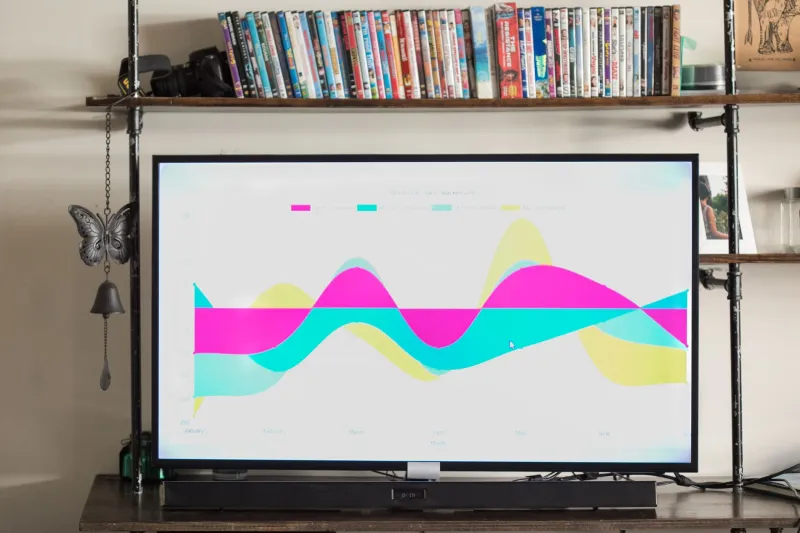
Americans spend considerable energy worrying about hidden cameras in vacation rentals and hotel rooms. Privacy-focused publications — including this one — have documented the real and growing threat of covert recording in temporary lodging. But there is a surveillance device already present in approximately 80 percent of American living rooms, one that most households purchased deliberately, positioned prominently, and connected to their home network without a second thought.
The modern smart television is not merely a display. It is a data collection platform. And the living room, long considered the most private space in the American home, has become one of the most comprehensively monitored environments that most people will ever occupy.
What Is Actually Built Into Your Television
The surveillance architecture embedded in contemporary smart TVs operates across three distinct layers, each serving different commercial interests.
Integrated cameras and microphones are present in a significant portion of high-end smart TV models, particularly those marketed with gesture control or video calling functionality. Samsung's higher-tier QLED lines and LG's premium OLED series have both shipped units with front-facing cameras capable of capturing video. These cameras are not hidden in the traditional sense — they are disclosed in product specifications — but their presence is rarely top-of-mind for consumers making a purchase decision based on picture quality and screen size.
The microphone situation is more pervasive. Voice-activated assistants, including Samsung's Bixby, LG's ThinQ AI, and Amazon Alexa integrations built into virtually every major smart TV platform, require always-on microphone access to function. In 2015, Samsung's privacy policy for its SmartTV line explicitly stated that voice commands, including "personal or other sensitive information," could be transmitted to third parties. The language caused significant public backlash and was subsequently revised, but the underlying technical architecture — a microphone that listens for a wake word — remained in place.
Automatic Content Recognition, or ACR, represents the most sophisticated and least understood layer of smart TV data collection. ACR technology works by continuously capturing frames from whatever content is displayed on screen — whether from a streaming service, a cable box, a gaming console, or an over-the-air broadcast — and comparing those frames against a vast database to identify what you are watching, second by second.
This data is extraordinarily valuable to advertisers. It tells them not merely that you subscribe to a streaming service, but which specific episodes of which shows you watch, at what time of day, for how long, and whether you skip through commercial breaks. Vizio's ACR system, marketed under the name Smart Interactivity, was collecting this data by default on millions of televisions before the company disclosed the practice clearly to consumers.
The Regulatory Record
The Federal Trade Commission has not been passive on this issue, though its enforcement actions have been limited relative to the scale of the data collection involved.
In 2017, the FTC and the New Jersey Attorney General reached a settlement with Vizio requiring the company to pay $2.2 million in penalties for collecting viewing data on 11 million televisions without adequate consumer disclosure. The settlement mandated that Vizio obtain affirmative consent before collecting ACR data and prohibited the company from sharing personally identifiable information with third parties without explicit permission. It was a landmark action — and it applied only to Vizio.
Samsung, LG, Sony, and TCL have faced no equivalent federal enforcement action in the United States, despite operating ACR and data collection systems that privacy researchers have characterized as functionally similar to Vizio's pre-settlement practices. The FTC's 2012 guidelines on smart TV privacy were non-binding recommendations, not enforceable rules, and the regulatory framework governing television data collection in the United States remains significantly weaker than equivalent legislation in the European Union.
Senator Edward Markey of Massachusetts has repeatedly raised concerns about smart TV surveillance in correspondence with the FTC, and privacy advocacy organizations including the Electronic Frontier Foundation have published detailed technical analyses of data flows from major smart TV platforms. Legislative momentum, however, has not translated into comprehensive federal regulation.
What the Data Is Used For — And Who Sees It
The commercial ecosystem built around smart TV data is more complex than most consumers appreciate. The television manufacturer is rarely the final destination for the information collected.
ACR data is typically licensed to data brokers and advertising technology companies who combine it with other data sources — purchase history, location data, social media behavior — to build detailed household profiles. These profiles inform targeted advertising not only on the television itself but across connected devices including smartphones, tablets, and computers. The practice is sometimes described as "cross-device targeting," and the smart TV serves as its anchor because of the richness and reliability of the viewing data it provides.
Cybersecurity researchers at Consumer Reports have documented cases in which smart TV platforms transmitted data to advertising networks even when the television's built-in streaming apps were not in use — meaning the data collection continued while a user watched cable television through an external set-top box. The television was, in effect, monitoring content it was not responsible for delivering.
Auditing and Securing Your Device
The surveillance architecture built into modern smart TVs cannot be fully neutralized without sacrificing core functionality, but meaningful privacy improvements are achievable through a series of deliberate configuration choices.
Disable ACR immediately. Every major platform provides a setting to turn off Automatic Content Recognition, though the terminology varies by manufacturer. On Samsung TVs, navigate to Settings > Support > Terms & Privacy > Viewing Information Services and disable the toggle. On LG devices, the equivalent setting is found under Settings > All Settings > General > Live Plus. Vizio users should access Settings > System > Reset & Admin > Viewing Data. These settings are not prominently surfaced and frequently reset following firmware updates, so verification after each software update is advisable.
Review microphone permissions. Disable voice assistant features entirely if you do not use them. If you do use voice control, familiarize yourself with the wake word sensitivity settings and consider whether the convenience justifies the always-on microphone access.
Isolate your television on a separate network segment. Many home routers support the creation of a guest network or VLAN. Placing your smart TV on a network segment that cannot communicate with other household devices limits the data it can access and reduces the risk of a compromised television serving as a vector for broader network intrusion.
Cover or disable integrated cameras. If your television model includes a front-facing camera, a physical cover — even a small piece of opaque tape — eliminates the optical risk entirely. Some manufacturers include a physical shutter; confirm whether yours does.
Consider a streaming stick or box as an intermediary. Devices such as the Apple TV or a Roku stick connected to a non-smart display give you control over the software environment without relying on the television manufacturer's data practices. A basic 4K display without smart functionality is available from multiple manufacturers and sidesteps the issue entirely.
The Surveillance You Invited Inside
The hidden camera threat that drives most Americans toward privacy tools like RF detectors and lens scanners is real. But the surveillance infrastructure embedded in the living room television represents a categorically different challenge: it is documented, commercially motivated, legally ambiguous, and present in homes across the country at a scale that no covert installation could approach.
The first step toward addressing it is the same step that defines effective privacy practice in any domain: understanding precisely what you are dealing with. Your smart television is a capable surveillance platform. Whether it operates as one is, to a meaningful degree, within your control — provided you know where to look.