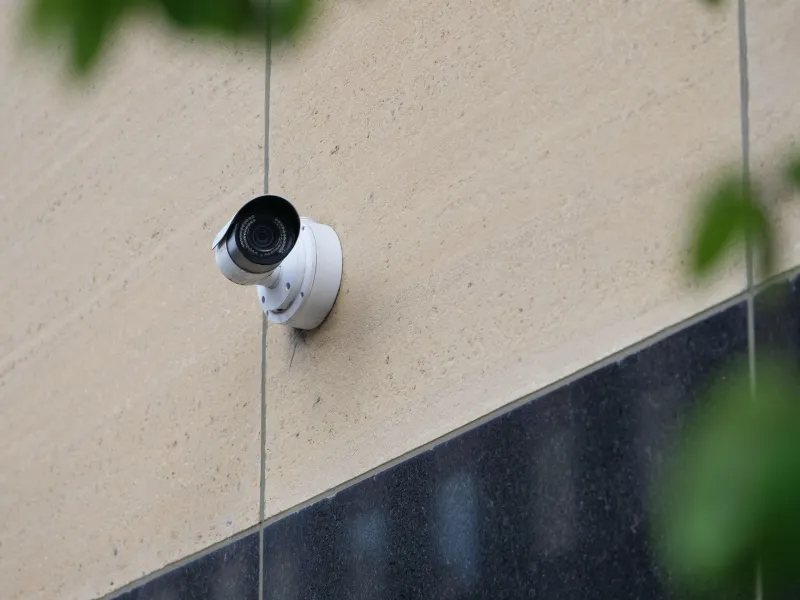
Ten Airbnbs, One Detector, and Some Uncomfortable Discoveries: A Field Report on Short-Term Rental Privacy
I want to be clear about something before I describe what happened in a rental property outside Nashville last spring: I am not a professional security researcher. I am a travel writer who covers technology, and I became interested in hidden camera detection the same way most people do — by reading one too many news stories about guests who discovered they had been recorded without their knowledge. What began as a precautionary habit eventually became a structured personal experiment, and this article is the result.
Over the course of fourteen months, I conducted systematic sweeps of ten different Airbnb properties across six states using a combination of consumer hardware, network scanning applications, and old-fashioned physical inspection. I documented the process at each property, logged the performance of each detection method, and in two instances, had to make decisions about what to do with what I found.
Here is what I learned.
The Setup: What I Brought Into Each Property
My detection kit evolved over the course of the experiment as I refined what was actually useful versus what looked impressive on a product listing. By the third property, I had settled on a consistent loadout:
1. JMDHKK Anti-Spy RF Detector (approximately $30) This compact device scans for radio frequency signals across a broad spectrum, flagging wireless cameras, GPS trackers, and other transmitting devices. It is not sophisticated enough to identify specific devices, but it functions well as a first-pass alert system.
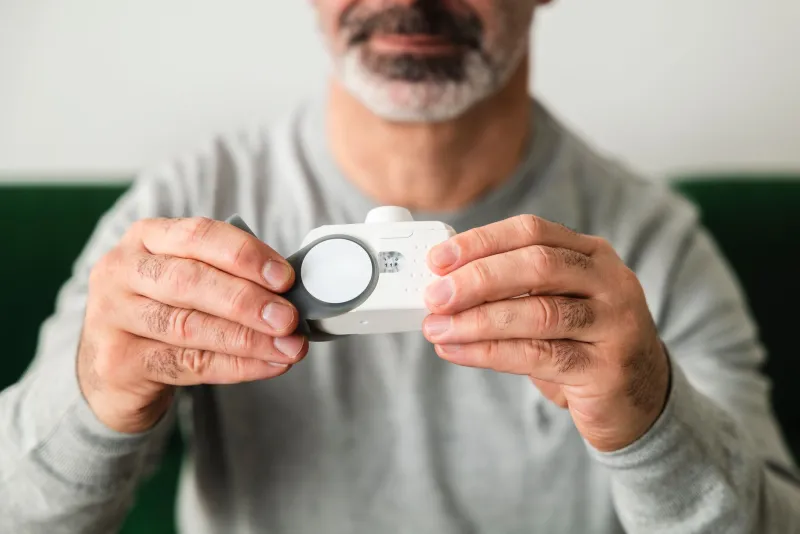
2. KOLSOL F68 Hidden Camera Lens Finder (approximately $25) The lens detection function uses a ring of infrared LEDs to illuminate the space while you view it through a small optical port. Camera lenses — even those on dormant, non-transmitting devices — reflect the IR light in a distinctive way. This was, in practice, my most reliable tool.
3. Fing Network Scanner (free iOS/Android application) Once connected to the property's Wi-Fi, Fing enumerates every device on the local network and displays manufacturer identifiers. IP cameras frequently appear with recognizable vendor names (Hikvision, Reolink, Wyze, Arlo) that do not belong in a bedroom or bathroom context.
4. A standard flashlight For physical inspection of objects, vents, and wall fixtures. Irreplaceable and underrated.
The Sweep Protocol
I developed a consistent routine to ensure I was not missing anything through haste or fatigue. Upon entering each property, before unpacking anything, I performed the following steps:
- Connected to the property's Wi-Fi and ran a Fing scan, saving the device list.
- Turned off all lights and drew the curtains to darken the space.
- Used the KOLSOL lens finder to sweep every room in a slow, methodical arc — paying particular attention to smoke detectors, clocks, decorative objects on shelves, and any device with a visible face pointed toward the sleeping or bathing area.
- Followed up with the RF detector in each room, moving slowly and noting any signal spikes.
- Conducted a manual physical inspection of objects that triggered either electronic tool or that struck me as oddly positioned.
The entire process took between 20 and 45 minutes depending on the size of the property.
What I Found Across Ten Properties
Properties 1 through 4 were clean by every measure. The Fing scans returned only expected devices — smart TVs, thermostats, the host's router — and neither the RF detector nor the lens finder flagged anything during physical sweeps. These were reassuring results, though I was careful not to treat absence of detection as absolute certainty.
Property 5, a studio apartment in Austin, Texas, produced an interesting Fing result: a device identified as a Wyze camera was visible on the local network. I cross-referenced this against the listing and found no camera disclosure anywhere in the property description. A physical sweep located a Wyze Cam v3 positioned on a bookshelf in the main living area, angled toward the pull-out sofa where guests slept.
I contacted the host directly through the Airbnb messaging system before taking any further action. The host responded within two hours, explaining that the camera had been used to monitor a previous property dispute and had inadvertently been left on the network. They directed me to unplug it, which I did, and they issued an apology. I filed an informational report with Airbnb nonetheless. The camera was in the living area — not the bedroom — and was technically disclosed in the host's house rules section in language so vague it could charitably be interpreted as covering it. I considered this a gray-zone encounter rather than a clear violation.
Property 7, a rural cabin in western North Carolina, was the most concerning sweep of the entire experiment. The lens finder produced a faint but consistent reflection from a smoke detector mounted above the bed in the master bedroom. Physical inspection confirmed it was a combination smoke detector and camera unit — a type of device sold commercially and not inherently illegal when disclosed, but emphatically prohibited in bedrooms under Airbnb's own policies.
I did not unplug the device. I checked out immediately, documented everything with photographs, and contacted Airbnb's Trust and Safety team through their dedicated reporting channel. I also filed a report with the local county sheriff's office, as North Carolina law prohibits the secret recording of individuals in locations where they have a reasonable expectation of privacy — a category that unambiguously includes a bedroom.
How Airbnb Responded
In the case of Property 7, Airbnb's response was measured but slow. I received an automated acknowledgment within hours, a human follow-up within 48 hours, and a full refund within five business days. The listing was removed from the platform within a week of my initial report. I was not given detailed information about what action was taken against the host, citing privacy policy constraints.
This experience reflects a broader pattern that privacy researchers have documented: platforms like Airbnb have strong written policies against undisclosed bedroom cameras, but enforcement is reactive rather than proactive. There is no pre-listing inspection process, no technical audit of devices on a host's network, and no mechanism to verify host disclosures before a guest checks in. The burden of detection falls entirely on the guest.
Which Detection Method Performed Best?
After ten sweeps, my honest assessment is this:
The KOLSOL lens finder was the most consistently reliable tool. It identified the smoke detector camera in North Carolina when the RF detector produced no signal — likely because the device was set to local storage mode and was not actively transmitting. If I could only bring one device, it would be this one.
The Fing network scanner was the most immediately actionable tool. Discovering a camera on the network before I even began a physical sweep gave me a specific target to locate and a documented record of the device's presence. In the Austin case, it was the network scan that flagged the issue.
The JMDHKK RF detector was the least reliable in isolation. It generated occasional false positives near smart TVs and routers, and it missed the North Carolina camera entirely. It remains useful as a secondary layer but should not be treated as a primary detection method.
Physical inspection with a flashlight remains non-negotiable. No electronic tool replaces the value of systematically examining every object in a space with fresh eyes.
Your Legal Options If You Find a Camera
If you discover what you believe to be an undisclosed camera in a short-term rental, the following steps are appropriate:
- Do not destroy or move the device if you intend to pursue legal action. Document it thoroughly with photographs and video.
- Check out of the property immediately if you feel unsafe.
- Report to the platform (Airbnb, Vrbo, etc.) through their official Trust and Safety channels. Keep records of all communications.
- File a report with local law enforcement. In states with explicit hidden camera statutes — including California, New York, Texas, Florida, and Illinois — covert recording in private spaces is a criminal offense. Local police are the appropriate first contact.
- Consult a privacy attorney if you have reason to believe footage was actually captured and distributed. Several law firms specialize in privacy tort claims, and statutory damages in some states are substantial.
- Contact your state attorney general's office. Many states have consumer protection divisions that track patterns of short-term rental privacy violations.
What I Do Differently Now
I sweep every rental property I stay in. The process has become routine enough that it adds less than half an hour to my check-in, and the peace of mind it provides is, in my estimation, worth considerably more than the combined cost of the detection hardware.
I also read listing descriptions more carefully than I once did, specifically looking for camera disclosure language — and I note its absence as a data point. I ask hosts directly, through the platform's messaging system, whether any recording devices are present on the property. The response — or the lack of one — is informative.
Short-term rentals are, in many ways, a remarkable development in American travel culture. The vast majority of hosts are conscientious, and the vast majority of properties are exactly what they appear to be. But the minority of cases in which they are not can have serious consequences, and the tools to protect yourself are inexpensive, accessible, and genuinely effective.
You do not need to be a security professional to expose what is hidden. You need about $60 worth of hardware and the willingness to use it.