Surveillance Blind Spots: The 10 Locations Where Hidden Cameras Operate in Legal Gray Zones Across America
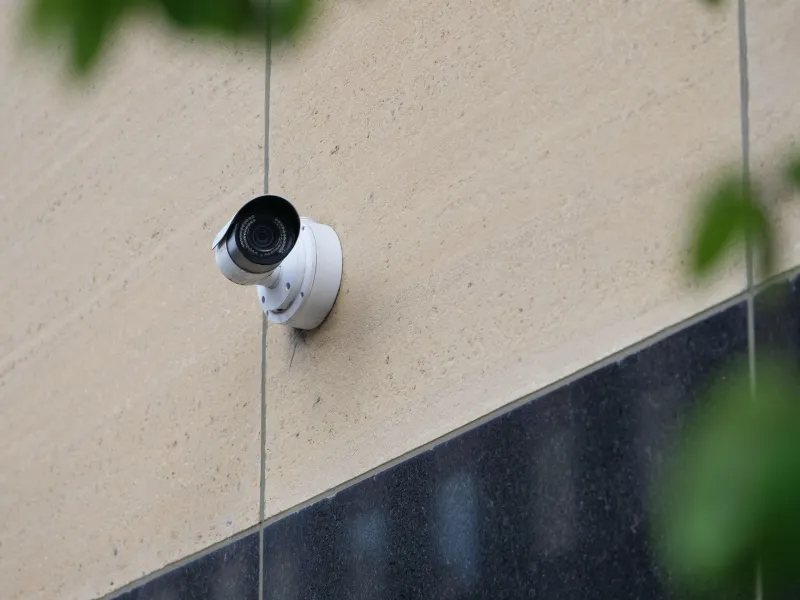
Most Americans operate under a reasonable assumption: if a camera is watching them without their knowledge, something illegal is happening. The truth, however, is considerably more unsettling. A fragmented web of federal statutes, state-level consent laws, and judicial precedents has produced a landscape in which surveillance cameras can legally record individuals in dozens of everyday settings — often without any posted notice and sometimes without any expectation of disclosure at all.
This guide maps those blind spots, explains the legal architecture that permits them, and equips you with the detection tools and techniques necessary to take your privacy back into your own hands.
Why U.S. Surveillance Law Is So Inconsistent
At the federal level, the primary governing statute is the Electronic Communications Privacy Act (ECPA) of 1986, which broadly prohibits the interception of communications but contains significant carve-outs for video-only surveillance in non-private spaces. The critical phrase courts have repeatedly emphasized is "reasonable expectation of privacy." If a location is deemed semi-public or if consent can be implied through the act of entering a space, video recording is frequently permitted.
State laws complicate the picture further. California's Penal Code Section 647(j) offers some of the nation's strongest protections against covert recording, while states such as Alabama and Mississippi impose far fewer restrictions on where cameras may be placed. The result is a 50-state patchwork that leaves most ordinary citizens unaware of their actual exposure.
1. Vacation Rental Common Areas
Short-term rental platforms like Airbnb and Vrbo explicitly prohibit cameras inside bedrooms and bathrooms, but their policies permit disclosed cameras in common areas such as living rooms, kitchens, and entryways. The operative word is disclosed — yet enforcement relies almost entirely on host self-reporting. In states without specific short-term rental surveillance statutes, a camera in a shared living space may be entirely lawful provided it is mentioned somewhere in the listing fine print.
Your exposure: High, particularly in shared or "room rental" listings where common areas are unavoidable.
2. Retail Dressing Room Adjacents
Federal law and most state statutes prohibit cameras inside changing rooms. However, the corridor directly outside a fitting room — or a wide-angle camera positioned at the entrance — occupies a genuine legal gray zone. Retailers frequently justify such placement as loss-prevention necessity, and courts have generally upheld it provided the camera's field of view does not extend into the stall itself.
Your exposure: Moderate. The angle of capture matters enormously, and not all retailers exercise careful placement.
3. Employer Break Rooms and Lounge Areas
Employers possess broad legal authority to monitor their own premises under the National Labor Relations Act and state workplace surveillance statutes. While cameras are generally barred from restrooms and areas designated for medical privacy, break rooms — where employees may have sensitive conversations or change clothing partially — are frequently surveilled without explicit employee notification in states that follow single-party or employer-consent frameworks.
Your exposure: Moderate to high, depending on your state's workplace privacy statutes.
4. Hotel Lobbies and Elevator Banks
Hotels are not required by federal law to notify guests of surveillance in common spaces. Lobby cameras, elevator cameras, and corridor cameras are standard practice and are rarely disclosed at check-in. In most jurisdictions, guests have no legal recourse against this recording so long as it does not extend into rooms or bathrooms.
Your exposure: Low for meaningful privacy intrusion, but noteworthy given the volume of personal behavior captured.
5. Gym Locker Room Perimeters
Similar to retail changing rooms, cameras are prohibited inside locker rooms in virtually every state. However, the entrance corridor, the scale area near the exit, and transitional spaces between the gym floor and the locker room entrance are frequently monitored. In several documented cases, cameras positioned to capture the entrance have inadvertently — or deliberately — recorded individuals in states of partial undress.
Your exposure: Moderate. The ambiguity lies in camera angle and field-of-view overlap.
6. Airbnb and VRBO Outdoor Spaces
A rental property's backyard, hot tub area, or patio may be equipped with cameras that are disclosed only in the listing description — which many guests skim or overlook entirely. Outdoor surveillance on private rental property is broadly legal in all 50 states, and the "outdoor" designation can include screened porches and semi-enclosed deck areas where guests reasonably expect a degree of seclusion.
Your exposure: High, particularly for guests who use outdoor amenities at night or in states of undress.
7. Academic Classroom Environments
K-12 schools and universities increasingly deploy surveillance cameras in classrooms, and federal law does not require student notification beyond general campus security disclosures. The Family Educational Rights and Privacy Act (FERPA) governs student records but does not specifically restrict classroom video surveillance. Several states have introduced legislation to address this gap, but the majority have not.
Your exposure: Low for adults, moderate for minors whose behavioral and academic patterns are captured without specific consent.
8. Rideshare and Taxi Interiors
Drivers for platforms such as Uber and Lyft are permitted by company policy to install dashboard and interior cameras, provided they disclose this to passengers. However, disclosure standards vary by state, and in single-party consent states, the driver's own consent may be sufficient to make interior recording lawful. Passengers frequently enter vehicles without reviewing any disclosure.
Your exposure: Moderate. Audio recording raises additional concerns in two-party consent states like California and Illinois.
9. Shared Co-Working Spaces
Co-working facilities are semi-public commercial environments, and their operators generally have wide latitude to install surveillance equipment throughout. Phone booths, private meeting pods, and even wellness rooms within co-working spaces may be monitored — with disclosure buried in membership agreements that few members read carefully.
Your exposure: Moderate, particularly in enclosed pods marketed as "private" workspaces.
10. Real Estate Open Houses
Homeowners are legally permitted to record visitors during open houses in the vast majority of states. These recordings are often justified as security measures against theft during showings. Visitors are rarely notified, and in single-party consent states, no notification is legally required. The footage may capture conversations between prospective buyers and their agents — conversations with significant financial implications.
Your exposure: Moderate. The legal recording of private negotiation-related conversations is a particular concern.
State-by-State Consent Snapshot
Understanding your home state's framework is essential:
- Two-party (all-party) consent states — including California, Florida, Illinois, Maryland, Massachusetts, Nevada, New Hampshire, Oregon, Pennsylvania, and Washington — require all recorded parties to consent to audio capture. Video-only surveillance rules remain separate.
- One-party consent states — the majority of the U.S. — permit recording provided at least one party (including the recorder) consents.
- States with specific hidden camera statutes — such as New York, Texas, and Michigan — impose additional restrictions on covert video recording beyond the baseline federal framework.
Always verify current statutes through your state attorney general's office, as laws in this area are evolving rapidly.
How to Detect Hidden Cameras in These Environments
Awareness of legal gray zones is only half the equation. The following detection methods can help you identify cameras in the locations described above:
RF (Radio Frequency) Detectors Devices such as the JMDHKK Anti-Spy Detector or the KOLSOL F68 scan for wireless transmission signals emitted by Wi-Fi–connected cameras. These are effective against streaming devices but will not detect cameras recording to local storage.
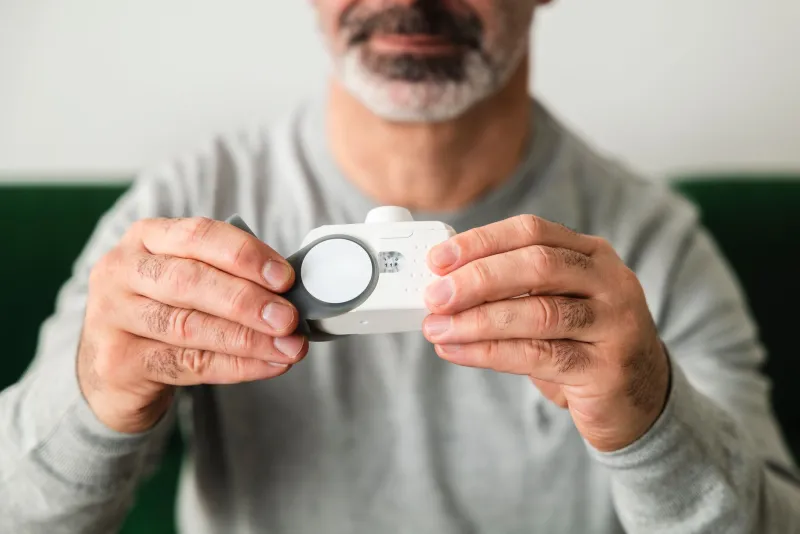
Lens Detection Devices Tools like the SZBJ Hidden Camera Detector use infrared LED arrays to cause camera lenses to reflect a distinctive glint visible through a viewing port. This method works regardless of whether the camera is transmitting, making it a reliable complement to RF scanning.
Network Scanning Applications In environments where you have Wi-Fi access — such as a vacation rental — apps like Fing or the dedicated "Hidden Camera Detector" by iVerify can enumerate all devices connected to the local network, flagging IP cameras by their manufacturer identifiers (MAC address prefixes).
Physical Inspection Protocol Before relying on electronic tools, conduct a systematic visual sweep. Examine smoke detectors, air purifiers, alarm clocks, USB chargers, picture frames, and decorative objects. Unusual screw holes, asymmetric ventilation grilles, or objects positioned with an unobstructed sightline to sleeping or bathing areas warrant closer inspection.
Final Observations
The legal permission to place a camera somewhere does not make that placement ethical, and it certainly does not mean you must accept it passively. Equipping yourself with detection knowledge and reliable tools is not paranoia — it is a proportionate response to a surveillance environment that has outpaced the law's ability to regulate it. At StealCam, our position is straightforward: you have the right to know when you are being watched, and you have the tools to find out.
When in doubt, sweep the room.