Monitored from Morning Bell to Final Period: The Sweeping Surveillance Infrastructure Now Embedded in American Schools
When a parent drops their child off at school each morning, they are likely thinking about homework deadlines, lunch money, and afternoon pickup arrangements. What they are probably not considering is that their child is about to spend the next seven hours inside one of the most comprehensively monitored environments in American civilian life — and that most of the data being gathered will never be reviewed by a single human being, stored instead in vendor servers whose privacy policies few administrators have read in full.
American schools have become, in a relatively short span of time, laboratories for surveillance technology. The shift accelerated after high-profile campus violence events in the early 2000s, gained further momentum through pandemic-era remote learning tools, and has since metastasized into a sprawling ecosystem of cameras, biometric systems, behavioral analytics platforms, and device-monitoring software. The students inside these systems are, in many cases, minors who have no meaningful ability to consent — and whose parents signed away data rights in enrollment paperwork buried beneath immunization records and bus route forms.
The Hardware: Cameras That Do More Than Record
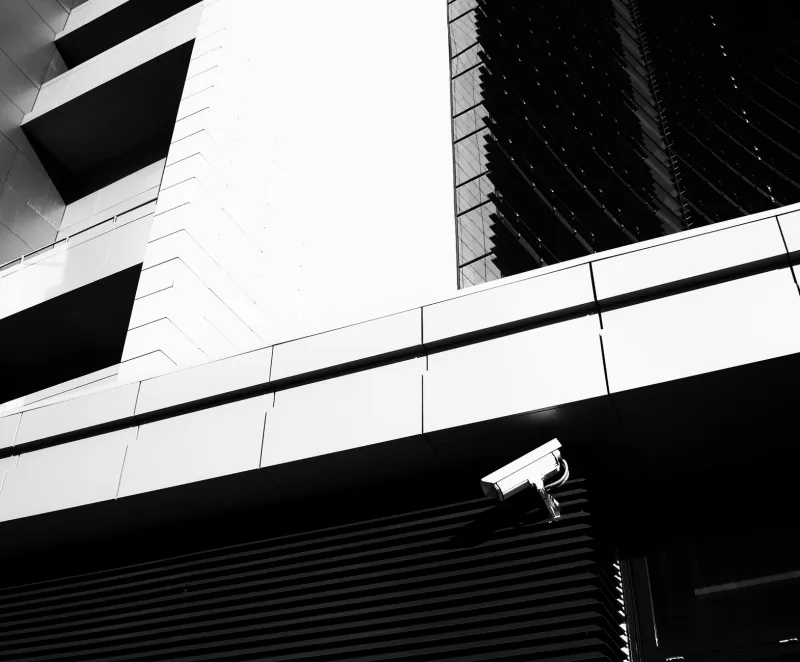
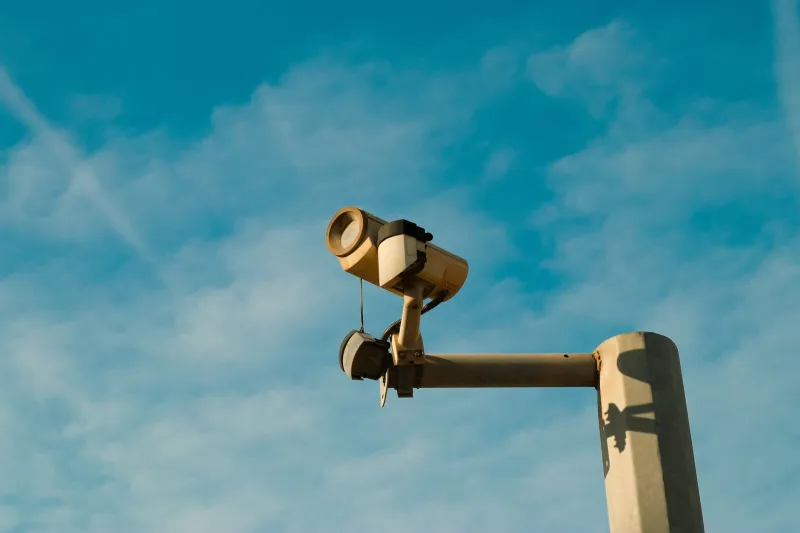
Closed-circuit camera networks have existed in schools for decades. What has changed is what those cameras are now capable of doing with the footage they capture.
Several school districts across the United States — including systems in New York, Texas, and Florida — have piloted or deployed AI-powered video analytics platforms that claim to detect weapons, identify unusual behavioral patterns, or flag individuals who appear on law enforcement watchlists. Some systems go further, incorporating facial recognition to track student movement through hallways, cafeterias, and gymnasium spaces in real time.
The Lockport City School District in upstate New York became a flashpoint in 2020 when it activated a facial recognition system called AEGIS, drawing national attention and a legal challenge from the New York Civil Liberties Union. State education officials ultimately restricted the technology's use, but the episode illustrated how quickly a district could move from procurement to deployment with minimal public scrutiny.
Proponents argue these tools enhance physical safety. Critics — including researchers at Georgetown Law's Center on Privacy and Technology — counter that the accuracy of facial recognition systems degrades significantly when applied to younger faces and darker skin tones, creating a discriminatory surveillance layer that falls hardest on students of color.
The Software: What Lives Inside the School Laptop
For many students, the more intimate surveillance happens not through a lens on the wall but through the device sitting open on their desk.
During the COVID-19 pandemic, schools distributed millions of Chromebooks and iPads to facilitate remote instruction. Alongside those devices came monitoring software — products like GoGuardian, Bark, and Securly — marketed to administrators as tools for filtering harmful content and detecting early warning signs of self-harm or violence. These platforms operate continuously, logging browsing activity, scanning emails and documents, and in some configurations, capturing screenshots at intervals or activating webcams when specific behavioral triggers are detected.
GoGuardian alone reports serving tens of millions of students across thousands of districts. Its dashboard allows administrators and, in some implementations, teachers to view a student's screen in real time. The company frames this capability as a safety feature. Privacy researchers frame it as remote surveillance of a child's bedroom — because that is precisely where many students used these devices during remote learning, and where some continue to use them for homework today.
Keystroke logging adds another dimension. Several enterprise-grade monitoring platforms record not just what a student submits or publishes but every character typed — including messages deleted before sending, search queries abandoned mid-thought, and private journal entries drafted in school-issued word processors. Students are rarely informed of this granular level of capture.
The Legal Landscape: Protective in Theory, Porous in Practice
Two federal statutes nominally govern student privacy. The Family Educational Rights and Privacy Act (FERPA), enacted in 1974, grants parents the right to inspect educational records and restricts their disclosure to third parties. The Children's Online Privacy Protection Act (COPPA) limits the collection of personal data from children under thirteen by commercial operators.
Both laws contain significant gaps when applied to modern school surveillance. FERPA was written before the concept of behavioral analytics software existed, and its definitions of what constitutes an educational record are contested. Surveillance footage, for instance, occupies a legal gray zone — some courts have treated it as an educational record subject to FERPA protections, while others have not.
COPPA's school exception is particularly consequential: it allows schools to authorize third-party vendors to collect student data on behalf of parents, effectively substituting institutional consent for individual parental consent. In practice, this means a district can contract with a monitoring platform, agree to its data terms, and begin collecting detailed behavioral profiles of minors — all without a single parent signing anything specifically related to that surveillance product.
State law adds another layer of complexity. California's Student Online Personal Information Protection Act (SOPIPA) is widely regarded as one of the stronger student privacy statutes in the country, restricting vendors from using student data for advertising or building behavioral profiles for non-educational purposes. Most states offer far weaker protections, and enforcement across all jurisdictions remains inconsistent.
The Normalization Argument: What Critics Fear Most
Beyond the immediate questions of data security and accuracy, a growing coalition of child development researchers, civil liberties organizations, and education advocates raises a more fundamental concern: what does it do to a child to grow up under continuous observation?
The American Civil Liberties Union, the Electronic Frontier Foundation, and numerous academic researchers have argued that pervasive school surveillance teaches children to internalize the presence of monitoring as a normal condition of daily life — a lesson that, once absorbed, may diminish their capacity to resist surveillance in adulthood. This argument draws on the work of sociologists who study how institutional environments shape behavioral expectations over time.
There is also the question of chilling effects on learning itself. Research on adult behavior under observation consistently demonstrates that people modify their conduct when they believe they are being watched. Children, whose intellectual and social development depends on the freedom to explore uncomfortable ideas, ask naive questions, and make recoverable mistakes, may be particularly vulnerable to the self-censoring effects of constant monitoring.
What Parents Can Do: A Practical Framework
Familiarity with the surveillance infrastructure inside your child's school begins with asking specific questions — and insisting on written answers.
Request a complete inventory of monitoring technologies. Ask the district's technology director or privacy officer to provide a list of every vendor platform currently deployed, the categories of data each collects, where that data is stored, and how long it is retained. Under FERPA, parents have the right to inspect educational records; use that right proactively.
Read the enrollment forms carefully — and ask for addenda. Broad consent language in standard enrollment paperwork may authorize data collection you have not specifically agreed to. Ask whether any supplemental consent forms exist for specific surveillance tools, and request copies of all active vendor contracts.
Inquire about opt-out provisions. Some districts allow families to opt out of specific data collection practices, particularly those involving biometric data. Several states — Illinois most prominently, through its Biometric Information Privacy Act — impose affirmative consent requirements before biometric identifiers can be collected from minors. Know your state's law.
Ask about data breach history and vendor vetting. School districts are frequent targets of cyberattacks precisely because they hold sensitive data on minors. Ask whether the district has experienced any breaches involving student data in the past three years and what vendor security standards are contractually required.
Engage the school board. Surveillance procurement decisions are typically made at the administrative level with limited public input. School board meetings are public forums where parents can raise concerns, request agenda items, and build coalitions with other families. Technology policies that have never been voted on explicitly can be challenged through this process.
Consult state-level resources. Many state attorneys general offices publish guidance on student privacy rights. Organizations including the Future of Privacy Forum and the Parent Coalition for Student Privacy maintain publicly accessible resources specifically designed to help families navigate these questions.
The Broader Stakes
Schools occupy a unique position in American civic life. They are institutions of public trust, charged not merely with academic instruction but with preparing young people to participate in a democratic society. The values embedded in those institutions — including the expectation of reasonable privacy, the freedom to think without monitoring, and the right to make mistakes without permanent record — are not incidental to that mission. They are central to it.
The surveillance infrastructure now embedded in American classrooms did not arrive through a single policy decision or public debate. It accumulated incrementally, vendor contract by vendor contract, crisis response by crisis response, until it became the invisible architecture of childhood. Recognizing it clearly is the first step toward deciding, as communities, whether it reflects the values we intend to pass on.