Strip-Searched by Surveillance: How America's Fitting Rooms Became the Retail Industry's Most Contested Privacy Frontier
Strip-Searched by Surveillance: How America's Fitting Rooms Became the Retail Industry's Most Contested Privacy Frontier
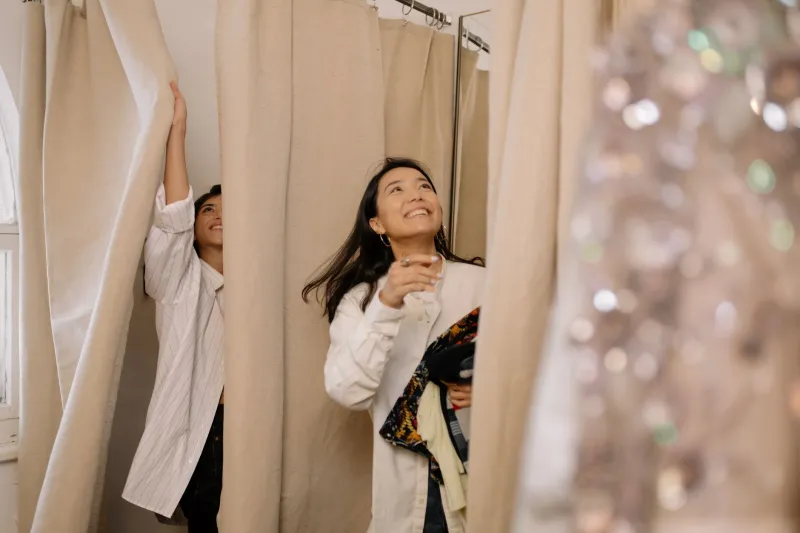
Every year, millions of Americans step into a retail fitting room with a reasonable assumption: that they are alone. They undress. They evaluate. They make purchasing decisions in what feels, by any common-sense measure, like a private space. What many do not realize is that this assumption rests on a legal foundation that is, at best, uneven — and, in several states, nearly nonexistent.
Fitting rooms occupy a peculiar position in American privacy law. They are privately owned spaces inside commercial establishments, meaning they fall outside the constitutional protections that govern government surveillance. They are also among the most intimate environments a person can occupy outside of their own home. And yet, the statutes designed to protect individuals in these spaces vary so dramatically from state to state that a hidden camera discovered in a dressing room in one jurisdiction may carry felony charges, while the same device found across a state line might result in nothing more than a misdemeanor — or no criminal liability at all.
The Legal Patchwork Across State Lines
Forty-nine states have enacted some form of video voyeurism statute, but the specific language governing fitting rooms differs considerably. Some states, including California, explicitly prohibit any video recording in spaces where a person has a "reasonable expectation of privacy" and where their intimate parts may be exposed. New York and Illinois carry similar provisions with relatively strong enforcement mechanisms.
Other states, however, define the offense narrowly. In several jurisdictions, a prosecution requires proving not only that a recording device was present, but that the operator intended to capture intimate images and that the victim was unaware of the surveillance. This burden-of-proof structure creates significant obstacles for law enforcement and, ultimately, for victims seeking justice.
Texas and Florida have updated their voyeurism statutes in recent years following high-profile cases, but privacy advocates argue that even the revised language leaves gaps — particularly around who is legally responsible when surveillance is conducted by a third-party contractor rather than the retailer directly.
"The law has simply not kept pace with how inexpensive and miniaturized recording technology has become," said one privacy attorney interviewed for this piece, who has represented multiple fitting room surveillance victims. "A device the size of a shirt button can stream live footage to a remote server. Most state statutes were written when 'hidden camera' meant something considerably larger."
Documented Cases at Major Chains
Fitting room surveillance incidents are not hypothetical. They have been documented at retailers ranging from regional clothing chains to nationally recognized brands.
In 2019, a former employee at a Nordstrom Rack location in Baton Rouge, Louisiana, was arrested after a pinhole camera was discovered concealed inside a dressing room. In 2021, a Target store in suburban Atlanta became the subject of a police investigation after a customer discovered a recording device mounted behind a ventilation panel. Similar incidents have been reported at Ross Dress for Less locations, department store chains, and independently operated boutiques across more than a dozen states over the past five years.
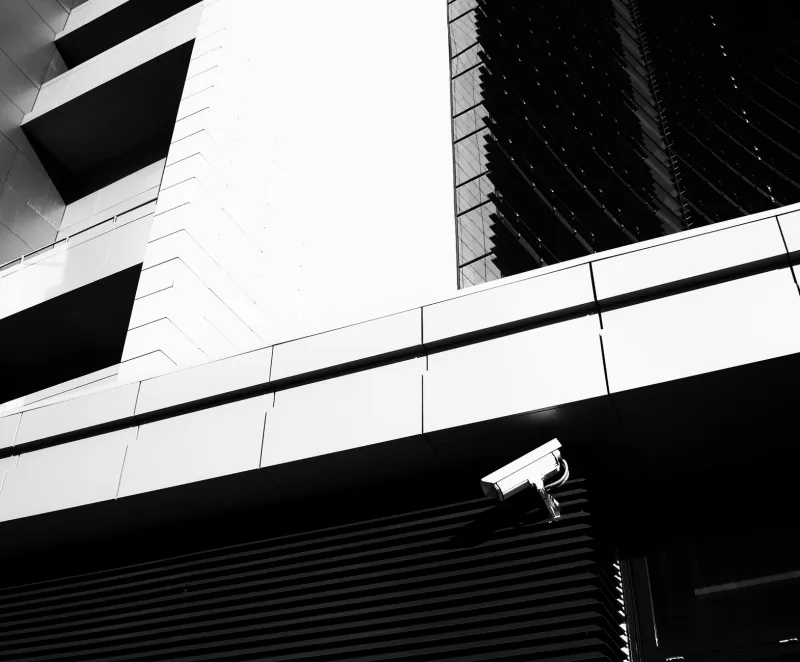
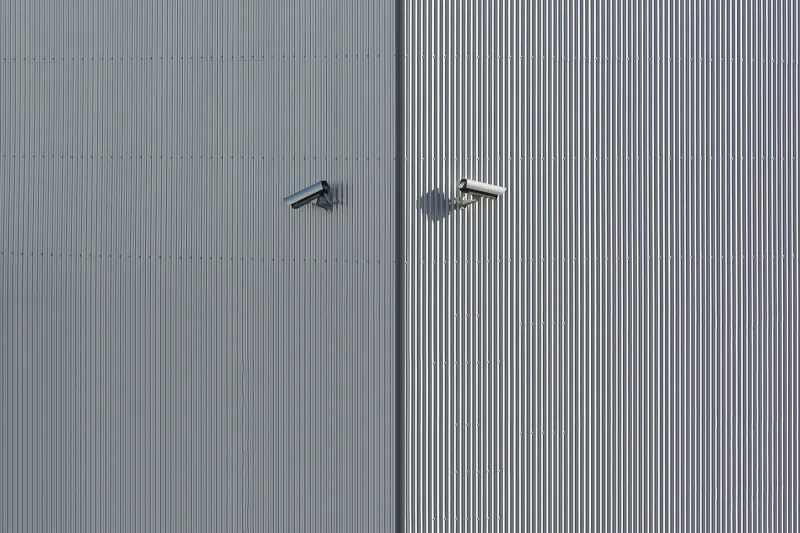
What these cases share is a disturbing common thread: in nearly every documented instance, the device was discovered by a customer or a coworker — not through any internal security audit or corporate monitoring protocol. Retailers invest heavily in floor-level surveillance infrastructure to deter shoplifting, but that same institutional attention rarely extends inward to the fitting room itself.
This inversion is not accidental. Fitting room surveillance for loss-prevention purposes is legally prohibited in most states, which means retailers have no sanctioned reason to monitor these spaces — and therefore no established protocol for ensuring they have not been compromised from within.
The Loss-Prevention Pressure Cooker
The retail industry faces genuine and substantial losses from fitting room theft. Merchandise is routinely concealed, tags are removed, and clothing is worn out of stores with the original garments left behind. These are not trivial concerns; the National Retail Federation has consistently identified fitting rooms among the highest-risk zones for organized retail crime.
This operational pressure creates what privacy researchers describe as a structural incentive problem. Loss-prevention professionals are evaluated on shrink reduction. Fitting rooms are shrink generators. The temptation to monitor — even where it is prohibited — does not disappear simply because a statute says it should.
Several former retail loss-prevention officers, speaking on condition of anonymity, confirmed that informal dressing room monitoring has occurred at major chains, sometimes through audio-only systems, sometimes through angled camera placements near entryways that capture more than their stated purpose, and occasionally through outright concealed recording devices installed without corporate authorization.
"Corporate policy says no cameras inside the fitting room," one former LP manager told us. "But when you're responsible for a store losing forty thousand dollars a month in merchandise, you start looking for workarounds. Not everyone does. But some do."
What Reform Advocates Are Pushing For
A coalition of consumer privacy groups, including the Electronic Privacy Information Center (EPIC) and several state-level ACLU chapters, has been lobbying for standardized federal legislation that would establish a uniform floor of protection for individuals in fitting rooms and other spaces of personal exposure.
The proposed framework would require retailers above a certain size to conduct annual third-party audits of all dressing room facilities, mandate immediate reporting to law enforcement when any recording device is discovered on premises, and establish strict civil liability for retailers whose employees or contractors install unauthorized surveillance equipment — regardless of whether the retailer had prior knowledge.
Opponents of federal preemption in this space argue that states should retain the authority to calibrate these standards to local norms and enforcement capacity. The debate remains unresolved, and no federal fitting room privacy bill has yet advanced through committee.
A Practical Detection Checklist for Shoppers
While legislative reform proceeds slowly, individuals can take concrete steps to assess fitting room environments before they become vulnerable. StealCam recommends the following protocol:
Before entering:
- Examine the door frame, ceiling corners, and any hooks or hangers mounted on walls. Pinhole cameras are commonly concealed in these locations.
- Look for any object that appears out of place or recently installed — a fresh screw hole, a new fixture that doesn't match the surrounding décor, or any device with a small dark aperture.
- Check smoke detectors or air freshener units mounted inside the fitting room. Both have been used as concealment housings.
Inside the room:
- Use your smartphone camera to scan the space. Many camera lenses will reflect visible light even when the device itself is dark. Pan slowly across walls, mirrors, and ceiling fixtures.
- If you carry a radio frequency (RF) detector — a compact device available for under $50 from most electronics retailers — activate it before undressing. Wireless cameras transmit signals that an RF detector can identify.
- Pay particular attention to two-way mirrors. The fingernail test remains reliable: place your fingernail against the mirror's surface. A genuine mirror will show a gap between your fingertip and its reflection; a two-way mirror will show the reflection touching your fingernail directly.
If you discover a device:
- Do not touch or move it. Preserve the scene.
- Document its location with your phone camera from a distance.
- Alert store management immediately and request that they contact law enforcement.
- File a report with local police regardless of whether management takes action.
- Contact your state attorney general's consumer protection office.
The Accountability Gap
Perhaps the most troubling dimension of the fitting room surveillance problem is what happens after a device is discovered. Victims frequently report that retailers move quickly to contain reputational damage rather than to support law enforcement investigations. Devices are sometimes removed before police arrive. Employees identified as suspects are quietly terminated rather than prosecuted. And victims, facing a civil litigation landscape that varies enormously by state, often find that their legal options are limited and expensive to pursue.
"There is no fitting room surveillance incident registry," noted one consumer advocacy researcher. "There is no centralized reporting mechanism. Every incident exists in isolation, which makes it nearly impossible to identify repeat offenders or systemic patterns."
Until federal standards are established and enforcement mechanisms are strengthened, the fitting room will remain what it has long been: a space that feels private, but carries no guarantee of being so. Shoppers who understand that gap — and who take deliberate steps to assess their environment — are the ones best positioned to protect themselves.
Privacy is not a passive condition. In the American fitting room, it is something you must actively verify.