Outpacing the Law: How AI-Augmented Surveillance Cameras Are Leaving Privacy Protections Behind
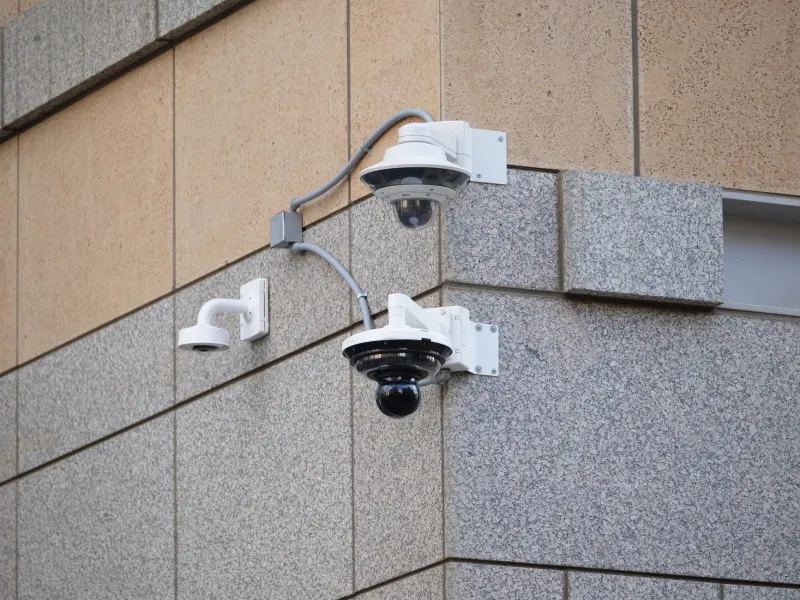
For years, the hidden camera detection industry operated on a relatively straightforward premise: cameras emit radio frequencies or infrared light, and sufficiently sensitive detectors can locate them. That premise is now under serious strain. A new generation of AI-enhanced surveillance hardware is challenging the fundamental assumptions on which detection technology was built — and the legal frameworks designed to govern surveillance have not come close to catching up.
The Machine Learning Advantage
Traditional covert cameras were passive devices. They recorded. They transmitted. They left detectable signatures. Modern AI-integrated units are different in kind, not merely in degree. These devices can now distinguish between meaningful activity and ambient motion, selectively activating only when a human subject is detected. Some models employ on-device processing — meaning footage is analyzed and stored locally rather than transmitted wirelessly — eliminating the radio frequency emissions that RF detectors rely upon to flag suspicious hardware.
The implications for detection are significant. An RF scanner sweeping a hotel room or vacation rental will return a clean result if the device it is hunting never broadcasts a signal. Lens-detection tools remain effective against passive units, but miniaturization has advanced to the point where camera apertures can be concealed within objects as mundane as a screw head or a USB charging port without any visible optical element.
Manufacturers of detection equipment are responding. Several leading device makers have incorporated AI of their own — training algorithms to recognize the electromagnetic behavioral patterns of smart cameras rather than relying solely on continuous RF output. The result is an escalating technical contest, one that tends to favor whichever side has more recently updated its hardware.
A Legislative Landscape Ill-Equipped for the Moment
American privacy law was not written with machine learning in mind. The federal statute most directly applicable to covert recording, the Electronic Communications Privacy Act, was enacted in 1986 — before the commercial internet existed, let alone algorithmic video analysis. State-level voyeurism statutes have historically focused on the act of recording rather than the technological sophistication of the recording device, leaving significant ambiguity around AI-enhanced systems that do not continuously record but instead trigger selectively.
A handful of state legislatures have begun addressing the gap, with varying degrees of urgency.
California amended its Penal Code Section 647(j) in recent sessions to broaden the definition of surveillance devices, though critics argue the language still does not explicitly account for on-device AI processing. Illinois, which maintains some of the country's most robust biometric privacy protections under the Biometric Information Privacy Act, has seen proposals introduced to extend similar protections to AI-analyzed video, though none have yet cleared both chambers. Washington State passed legislation in 2023 strengthening consumer data rights under the My Health MY Data Act, a measure that has downstream implications for biometric data captured by smart surveillance hardware, though its application to covert devices remains untested in court.
By contrast, the majority of states have made no substantive updates to their surveillance statutes in over a decade. In these jurisdictions, prosecutors attempting to bring charges related to AI-enhanced covert recording face the uncomfortable reality of applying twentieth-century language to twenty-first-century conduct.
The Detection Industry's Counter-Move
Device manufacturers on the privacy-protection side of this equation are not standing still. Several companies have introduced detectors that combine traditional RF scanning with optical lens detection and, more recently, behavioral electromagnetic analysis — monitoring for the subtle power draw signatures that smart cameras produce when their AI modules activate. These multi-modal devices represent a meaningful advance, but they carry price points that place them out of reach for most consumers.
The practical consequence is a two-tier privacy landscape. Professionals — corporate security teams, investigative journalists, law enforcement — have access to detection hardware sophisticated enough to identify current-generation AI cameras. Private individuals, who are statistically far more likely to encounter covert surveillance in domestic and hospitality settings, are largely relying on consumer-grade tools that were designed for an earlier technological era.
What Needs to Happen — and When
Privacy advocates and technology law scholars are increasingly aligned on a core recommendation: federal legislation must establish a technology-neutral standard for covert surveillance that defines prohibited conduct by its intent and effect rather than by the specific hardware involved. Such a framework would encompass AI-enhanced devices without requiring legislative revision every time a new technical capability emerges.
In the absence of federal action, individual Americans carry more responsibility for their own protection than they should reasonably be expected to bear. Conducting a thorough physical inspection of unfamiliar spaces — vacation rentals, hotel rooms, temporary accommodations — remains the most reliable first line of defense. Lens-detection tools, even consumer-grade models, can identify optical elements that RF scanners will miss. And reporting suspected devices to local law enforcement, even in jurisdictions where legal outcomes are uncertain, creates a paper trail that may prove consequential as case law develops.
The technology is moving. The law is not moving fast enough. The distance between those two facts is where privacy is currently being lost.