Silent Lens: The Unauthorized Camera Access Hidden Inside Your Smartphone Apps
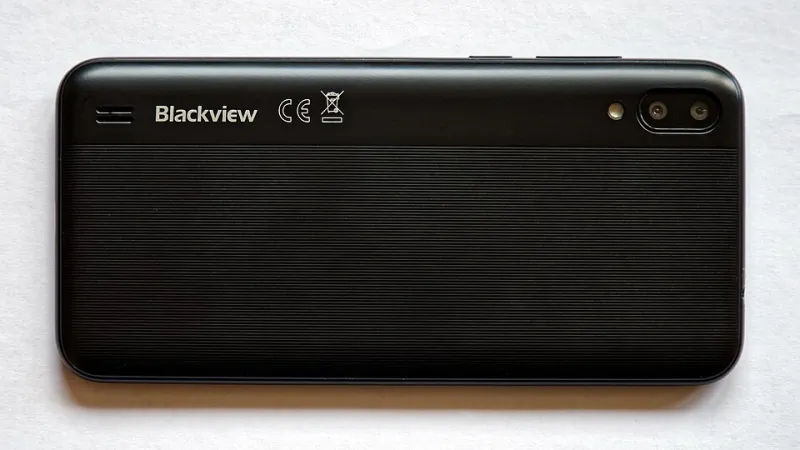
Photo: Acabashi, CC BY-SA 4.0, via Wikimedia Commons
The camera on your smartphone is, by most measures, the most intimate surveillance device you will ever own. It travels with you, sits beside your bed, and peers into spaces that no external camera could reasonably reach. For that reason, it has become a primary target for those who exploit mobile platforms for unauthorized observation — and the methods being used are considerably more sophisticated than most users appreciate.
The Mechanics of Covert Access
Unauthorized smartphone camera access does not typically arrive through dramatic hacking sequences. It enters quietly, embedded in applications that appear entirely legitimate. Mobile security researcher Dr. Alicia Vance, who has spent the better part of a decade auditing consumer apps for privacy violations, describes the process plainly: "The most effective exploits are the ones that look the least threatening. A flashlight app, a weather widget, a free photo editor — these are the categories where we consistently find permissions that have no plausible relationship to the app's stated function."
The mechanism varies. Some applications request camera permissions outright during installation, burying the justification in dense terms-of-service language that virtually no user reads in full. Others acquire access incrementally, requesting permissions through in-app prompts after a user is already engaged with the product. A third and more troubling category involves apps that function legitimately at the point of download but acquire expanded permissions — including camera access — through background updates pushed after the initial install.
This last vector is particularly difficult to detect. A user who carefully reviewed permissions at installation has no automatic notification when a subsequent update quietly expands the scope of what the application can access.
What the Research Shows
A 2023 analysis conducted by a team at a major northeastern university examined more than 4,000 applications available through mainstream app marketplaces. The findings were instructive: approximately 17 percent of applications with active camera permissions had no documented feature that required camera functionality. Among free applications in the utility category, that figure climbed to nearly 28 percent.
More concerning still were the behavioral patterns observed in a subset of those apps. Network traffic analysis revealed that a portion of the flagged applications were transmitting compressed image data at irregular intervals — consistent with periodic still captures rather than user-initiated photography. None of these applications disclosed such behavior in their privacy policies.
Cases of real-world impact are not hypothetical. A Chicago-based marketing professional, whom we will identify only as Marcus, discovered last year that a productivity application he had used for nearly two years contained code that had been accessing his front-facing camera during late-night charging sessions. He discovered the activity only after installing a network monitoring application that flagged unusual outbound data packets. "I felt like I had been watched in my own home for months," he said. "And technically, I had been."
The Permissions Audit: Where Most Users Fall Short
Both major mobile operating systems — iOS and Android — provide mechanisms for reviewing and revoking application permissions. The problem is that most users access these settings only during initial device setup, if at all. Permissions granted to applications installed months or years ago frequently remain active regardless of whether the user continues to use the application.
Conducting a meaningful permissions audit requires navigating to the camera-specific permissions menu within your device's privacy settings. On both platforms, this view will display every application currently authorized to access your camera. The critical question to ask of each entry is not whether you recognize the application, but whether camera access is genuinely necessary for the function you use it for.
Applications that warrant particular scrutiny include:
- Utility apps (flashlights, calculators, unit converters) with camera permissions
- Games that request camera access without an augmented reality component
- Keyboard and input applications, which have historically been among the most aggressive permission requesters
- Free VPN services, where the business model is frequently dependent on data collection rather than subscription revenue
Revoking camera permissions from applications that do not require them carries no functional cost and meaningfully reduces your exposure.
Hardening Your Device Against Unauthorized Access
Beyond the permissions audit, several additional measures provide meaningful protection. Camera indicator lights — the small dot that appears on modern iOS and Android devices when the camera is actively in use — represent a first line of detection. Users who notice this indicator activating during periods of apparent device inactivity should treat it as a serious warning sign.
Mobile security researcher James Okafor, who consults for several US financial institutions on device security policy, recommends a layered approach. "The indicator light is useful, but it can be circumvented on some older devices and on rooted or jailbroken hardware," he notes. "The more reliable practice is combining indicator awareness with periodic network monitoring and keeping your operating system current. The majority of exploits targeting camera access are patched within weeks of discovery — but only for users who actually install updates."
Additional protective measures include:
- Disabling camera access for all applications by default, enabling it only for those where the function is clearly necessary (native camera app, video calling platforms)
- Reviewing app updates before installing, particularly for applications that request expanded permissions as part of the update
- Uninstalling applications that are no longer in active use, since dormant apps with active permissions represent unnecessary exposure
- Using a physical camera cover for the front-facing lens during periods when video calling is not anticipated — an inelegant but entirely effective countermeasure
The Regulatory Landscape
Federal privacy law in the United States does not currently impose specific, enforceable restrictions on the scope of permissions that consumer applications may request. The Federal Trade Commission has pursued enforcement actions against companies engaged in deceptive data practices, but the standard for what constitutes a deceptive permission request remains loosely defined.
Several states have moved to fill this gap. California's Consumer Privacy Act and its subsequent amendments provide residents with rights to disclosure and deletion of personal data, which extends in principle to data collected through unauthorized camera access. Illinois has pursued more aggressive enforcement under its Biometric Information Privacy Act. For users in other states, however, the practical recourse following a camera access violation remains limited.
What This Means for Everyday Users
The smartphone camera represents a surveillance vector that receives considerably less attention than the hidden cameras embedded in rental properties or public spaces — in part because the device is personally owned and the threat feels less intuitive. It should not. The same discipline that StealCam recommends for scanning a hotel room or an Airbnb rental applies to the device in your pocket.
The starting point is the permissions audit. Perform one today, repeat it quarterly, and treat any application with camera access it cannot justify as a candidate for removal. The lens that sees the most intimate details of your life should not be accessible to parties you have never knowingly authorized.