The Store Knows More Than Your Receipt Reveals: Inside America's Retail Surveillance Machine
The Store Knows More Than Your Receipt Reveals: Inside America's Retail Surveillance Machine
Consider the last time you walked into a grocery store, a pharmacy chain, or a big-box retailer. You selected items, perhaps consulted your phone, lingered in one aisle longer than another, and completed a transaction. In your understanding of that visit, you were a customer making purchases. In the understanding of an increasingly sophisticated retail surveillance apparatus, you were a data-generating subject whose face, movement patterns, emotional responses to product displays, and behavioral profile were being captured, analyzed, and in some cases retained indefinitely.
This is not a future scenario. It is the present state of American retail.
From Loss Prevention to Behavioral Intelligence
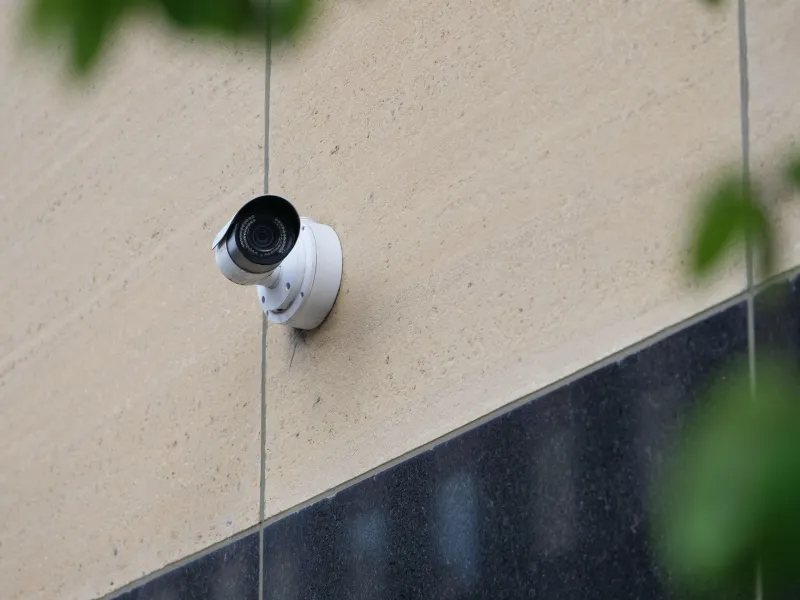
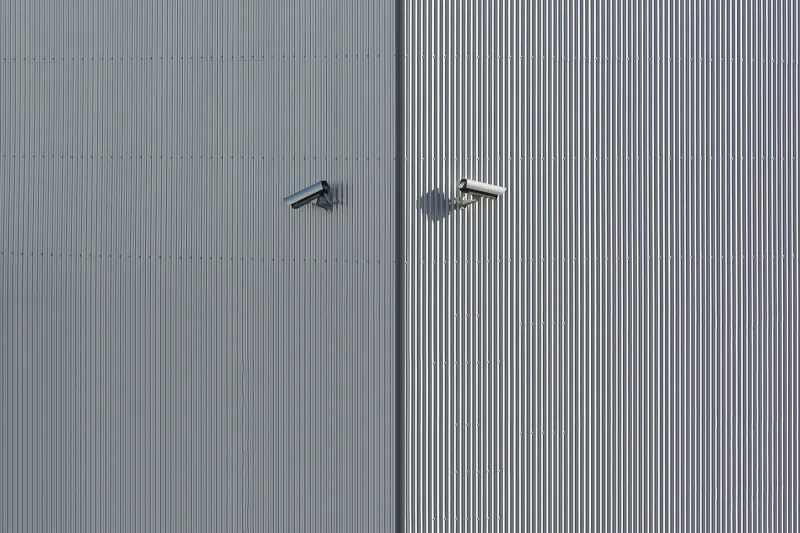
Retail surveillance began with a straightforward purpose: deter shoplifting and document theft for law enforcement purposes. The analog cameras mounted near exits and above cash registers represented a reasonable and broadly accepted trade-off between merchant security interests and shopper privacy. That era has effectively ended.
The systems now operating in a significant portion of U.S. retail locations bear little resemblance to their predecessors in either capability or purpose. The shift began accelerating around 2018, as the cost of high-resolution cameras, cloud computing infrastructure, and machine learning processing fell to levels accessible to mid-size retailers, not just enterprise chains. What followed was a rapid and largely undisclosed expansion of what stores are actually measuring.
Facial recognition technology, deployed by vendors including Clearview AI (whose retail partnerships have been the subject of ongoing legal scrutiny), Verkada, and several smaller specialized firms, allows retailers to build databases of known shoplifters — but also, in some implementations, to identify and track individual customers across multiple store visits. The technology does not require a prior criminal record to generate a profile. A face, captured once, can anchor a longitudinal record.
Emotion detection systems — sometimes marketed under the softer label of "customer sentiment analysis" — use AI models trained to interpret facial muscle movements as proxies for emotional states. Retailers deploy these systems to measure shopper reactions to product placement, promotional signage, and store layout changes. The premise is that a customer who lingers near a display while registering what the algorithm classifies as positive affect is more likely to convert — and that this information can optimize shelf arrangements at scale.
Behavioral analytics platforms, meanwhile, track aggregate and individual movement patterns using overhead camera arrays, sometimes supplemented by Wi-Fi and Bluetooth signal monitoring from shoppers' mobile devices. These systems generate heat maps, dwell-time metrics, and conversion-rate analyses that are sold to retailers as operational intelligence.
Which Retailers Are Involved?
Documentation of specific deployments is difficult to compile comprehensively, partly because retailers are not required to disclose these systems in most U.S. states, and partly because vendor contracts frequently include confidentiality provisions. However, investigative reporting and regulatory filings have established a partial picture.
Walmart has acknowledged the use of AI-powered camera systems for inventory management and loss prevention, though the full scope of its facial recognition activity has not been publicly confirmed. Home Depot and Lowe's have been identified in reporting by advocacy groups as users of facial recognition-adjacent technologies in their loss-prevention operations. Kroger has piloted emotion-detection systems through a partnership with Microsoft that attracted significant coverage in 2019, analyzing shopper reactions at digital display kiosks.
Drugstore chains — CVS and Rite Aid among them — have faced direct regulatory action. The Federal Trade Commission reached a settlement with Rite Aid in 2023 over its use of facial recognition technology, finding that the company had deployed the system in a manner that produced racially biased results and failed to adequately train staff on the technology's limitations. The settlement banned Rite Aid from using facial recognition for five years. It was a significant enforcement action, but it addressed a single company's conduct rather than establishing sector-wide rules.
Smaller specialty retailers and mall-based chains represent an additional layer of deployment that receives less scrutiny. Third-party analytics vendors offer turnkey systems that can be installed with minimal technical overhead, meaning the surveillance infrastructure is not limited to companies with large technology budgets.
The Legal Framework: Protective in Theory, Porous in Practice
U.S. law governing retail surveillance is, at present, a collection of state-level statutes with significant gaps rather than a coherent federal framework.
Illinois leads the country in this area with its Biometric Information Privacy Act (BIPA), enacted in 2008. BIPA requires entities that collect biometric identifiers — including facial geometry — to obtain written consent, establish a retention policy, and refrain from selling the data. Critically, it provides a private right of action, meaning individuals can sue without waiting for a regulator to act. The law has generated substantial litigation against retailers, technology companies, and employers.
Texas and Washington have enacted their own biometric privacy statutes, though neither provides the same private right of action as BIPA. California's Consumer Privacy Act (CCPA) and its successor, the California Privacy Rights Act (CPRA), give residents the right to know what personal information businesses collect and to request its deletion, but the statutes were not written with biometric retail surveillance specifically in mind, and enforcement has been uneven.
At the federal level, no comprehensive consumer biometric privacy law exists. The American Data Privacy and Protection Act has been debated in Congress but has not advanced to passage. The FTC has used its Section 5 authority over unfair and deceptive trade practices to pursue individual cases — the Rite Aid settlement being the most prominent recent example — but this approach is reactive and resource-intensive.
For shoppers in states without biometric privacy laws, and for those subject to behavioral analytics that do not technically involve biometric data, the legal protection is minimal.
What Shoppers Can Do
The asymmetry between what retailers know and what shoppers understand about their own data exposure is considerable. Closing that gap entirely is not realistic under current conditions, but several concrete steps can meaningfully reduce an individual's surveillance footprint in retail environments.
Disable Wi-Fi and Bluetooth before entering stores. Retail analytics platforms frequently use passive signal detection to track device movement through a space. A device with these radios disabled is substantially harder to track through this method.
Understand your state's opt-out rights. If you are in California, you have the right to request that businesses not sell or share your personal information. Several retailers maintain opt-out mechanisms that are not prominently advertised. The business's privacy policy, while often dense, should identify whether biometric data is collected and what choices are available.
Use cash for transactions when privacy is a priority. Payment card data, loyalty program data, and biometric capture can be linked to construct a detailed profile. Cash eliminates the transactional data layer.
Decline loyalty program enrollment if data minimization is your goal. Loyalty programs are structured to be valuable to consumers, and the trade-off is often reasonable. But the data collected through these programs — purchase history, visit frequency, product preferences — is frequently combined with behavioral and biometric data collected in-store.
File complaints when you believe a violation has occurred. In Illinois, BIPA complaints can be filed directly in state court. In other states, the state attorney general's office and the FTC's online complaint portal are appropriate channels. Regulatory enforcement is partly driven by complaint volume.
Support legislative efforts. The most durable protection against retail surveillance overreach is a federal biometric privacy law with a private right of action. Consumer advocacy organizations including the Electronic Frontier Foundation and the ACLU track relevant legislation at both state and federal levels.
The Broader Implication
Retail surveillance expansion reflects a broader pattern: technology that was once too expensive or technically demanding for widespread deployment becomes accessible, and deployment precedes regulation by years or decades. By the time legal frameworks catch up, the data has already been collected, retained, and in many cases monetized.
Shopping — an activity that most Americans engage in multiple times per week — has become a passive source of biometric and behavioral data that flows to parties the shopper has never interacted with and cannot easily identify. Awareness of that reality is the first prerequisite for any meaningful response to it. The store's cameras have always been watching. The question worth asking now is what, exactly, they have learned to see.